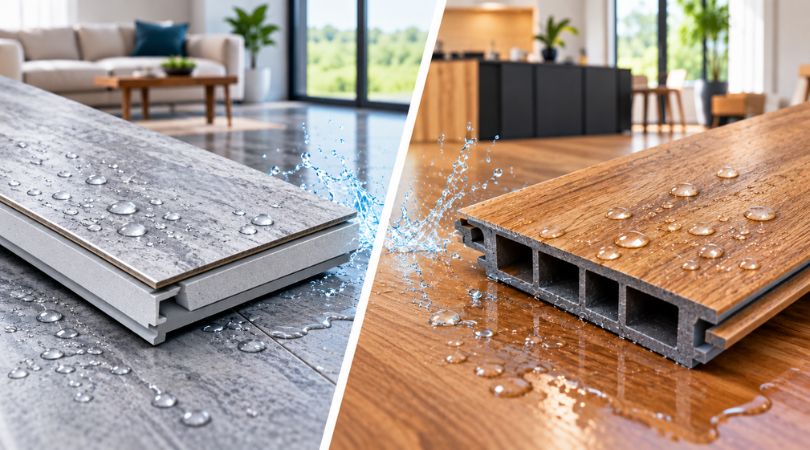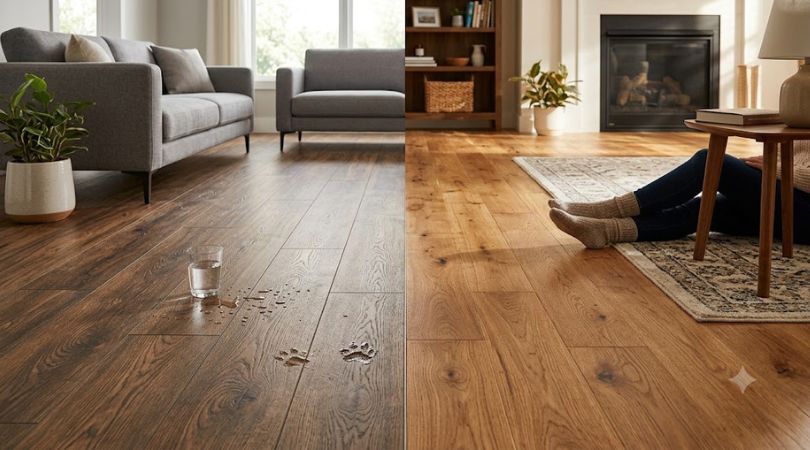
The best pet-friendly flooring is rigid SPC vinyl, followed by porcelain tile and a quality laminate. All three resist scratches, shrug off accidents, and give paws grip. If you want real wood, pick a hard species like hickory with a tough factory finish. The floors to avoid with an active dog are soft woods, glossy finishes, and anything that swells when it gets wet.
Why Pets Are Hard On Floors?
Dogs and cats do things to a floor that furniture never will. A dog running plants its claws at every turn, an accident sits and soaks while you are at work, and an older pet slides on a surface with no grip. A floor that is perfect for a quiet couple can be the wrong floor the day a 30 kilo retriever moves in.
The good news is that flooring has moved on. Materials built for busy commercial spaces now come in finishes that look at home in a house, and that is exactly what a pet household needs.
Cats And Dogs Damage Floors Differently
Most guides lump pets together. That is a mistake, because the two animals attack a floor in completely different ways, and the right floor depends on which one you have.
Dogs are a surface-abrasion problem. Claws drag across the finish with the dog’s full body weight behind them, concentrated on a few small points. Large dogs add impact, because a 40 kilo animal dropping onto a floor dents soft material. Dog accidents are also large in volume, so they spread to seams before anyone notices.
Cats are a point-load and edge problem. A cat’s claws are sharper and finer, so they score a finish rather than abrade it, and the damage shows up as fine lines that catch the light. Cats also target edges and thresholds when they stretch. Cat urine is the harder cleanup, because it is more concentrated and it soaks into anything porous, where the odour stays long after the stain is gone.
The practical difference: for dogs, prioritize a thick wear layer and dent resistance. For cats, prioritize a sealed, non-porous surface with tight seams, and skip anything porous like unsealed cork or an oiled finish.
The Three Challenges Any Pet Floor Faces
Break the problem into three parts and the choice gets clearer. A pet floor has to handle all three, not just one.
- Scratches:claws rake the surface every day, concentrating force on a tiny contact point.
- Moisture:accidents, drool, wet paws after a Quebec slush storm, and knocked-over water bowls.
- Grip:dogs need traction to move safely, and slippery floors cause falls that injure hips and joints, especially in older animals.
A floor that wins on scratches but fails on grip is still the wrong floor. Weigh all three together.
The Materials That Hold Up, Ranked
Here is how the realistic options perform against everything that matters, best to worst overall.
| Material | Scratch | Water | Grip | Comfort Underfoot | Maintenance | Realistic Lifespan | Installation | Pet Verdict |
|---|---|---|---|---|---|---|---|---|
| Rigid SPC Vinyl | Excellent | Waterproof | Good, matte finish | Warm, slight give | Very low | 20 to 25 years | Floating, DIY-friendly | Best all-round |
| Porcelain Tile | Excellent | Waterproof | Good if textured | Hard and cold | Very low, grout needs sealing | 50 years plus | Professional installation | Excellent, hard on joints |
| Laminate (AC4+) | Very good | Water-resistant | Good | Firm | Low | 15 to 20 years | Floating, DIY-friendly | Strong value |
| Hardwood (Hard Species) | Good | Not waterproof | Good | Warm | Higher, refinishable | 50 years plus | Professional installation | Best for wood lovers |
| Engineered Hardwood | Good | Water-resistant | Good | Warm | Moderate | 25 to 40 years | Floating or glue | Good wood compromise |
| Soft Wood or Thin Veneer | Poor | Poor | Fair | Warm | High | 10 to 15 years | Professional installation | Avoid with a dog |
SPC vinyl leads because it does everything a pet household asks and stays warm underfoot, which matters in a Quebec winter. Porcelain is nearly indestructible but hard on joints and cold without radiant heat. The same durability logic drives our high-traffic flooring guide, because an active dog stresses a floor much like a busy corridor does.
Large And Giant Breeds Change The Math
Once you pass roughly 35 kilos, the failure mode shifts from scratching to denting. A Bernese, a Great Dane, or a Newfoundland lands with real force, and soft material takes a permanent impression that no finish can hide. Nails are also thicker and blunter, so they gouge instead of scoring.
For large breeds I move people up a tier: SPC with a 28 mil or thicker wear layer, porcelain, or hickory rather than oak. I also push harder on grip, because big dogs are the ones who tear a cruciate ligament on a slippery floor, and that is a several thousand dollar veterinary problem. Skip floating floors over soft foam underlay with giant breeds, since the give under the plank contributes to denting.
Wear Layers And Why The Finish Decides Everything
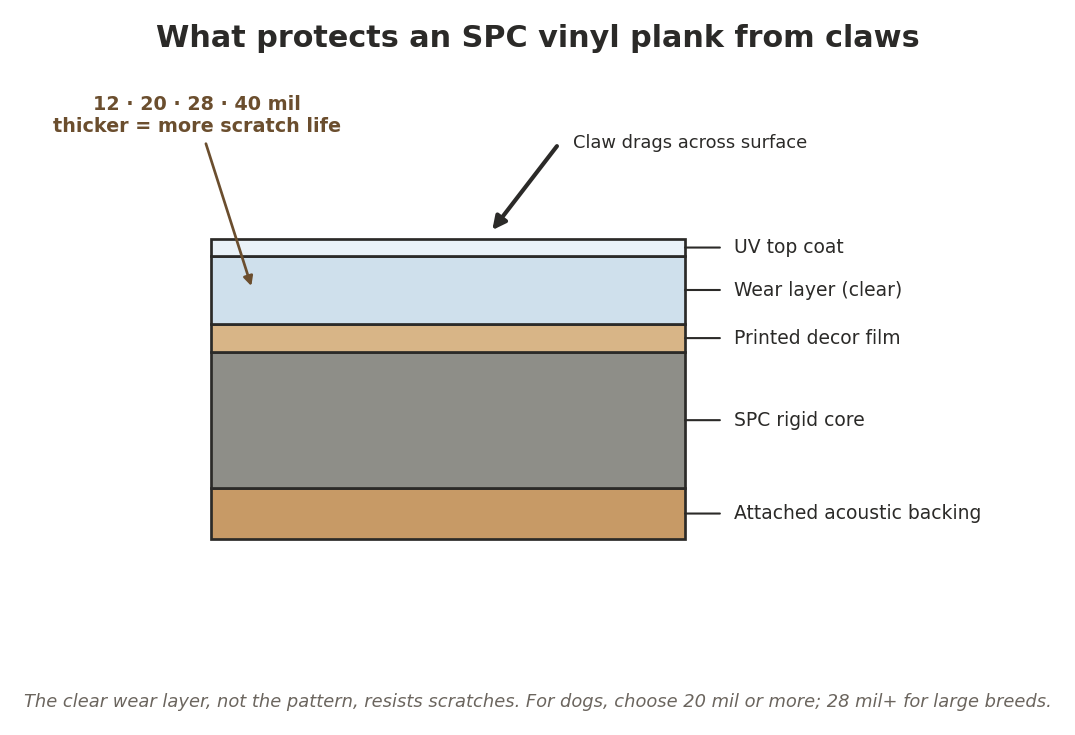
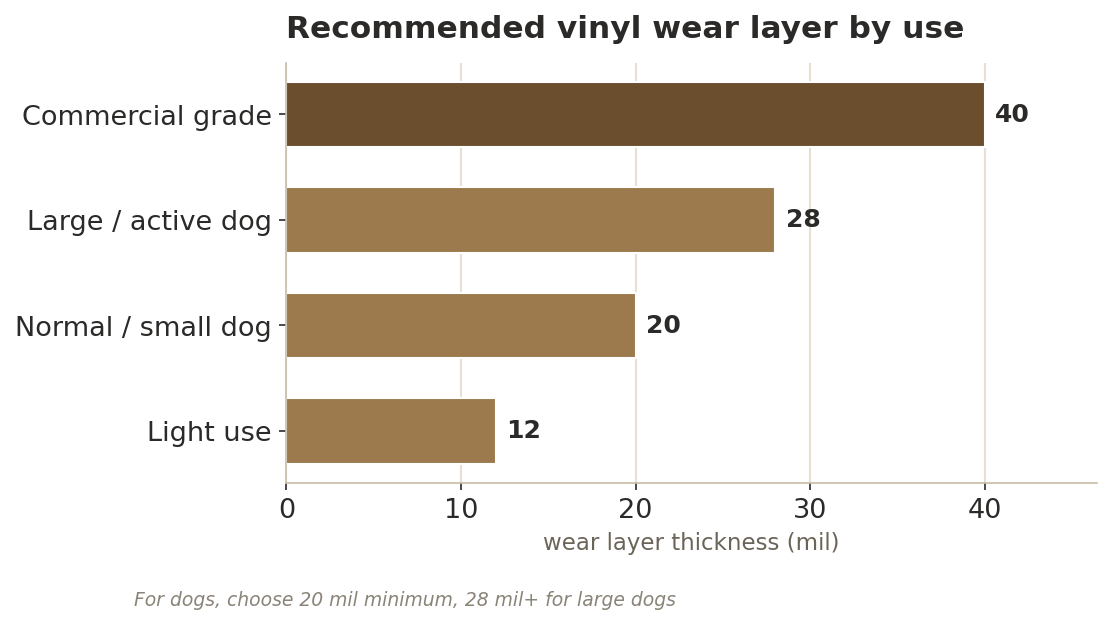
With vinyl and laminate, the number that predicts scratch survival is the wear layer, the clear tough coat over the printed pattern. Thicker means longer life. For a home with dogs I recommend a vinyl wear layer of at least 20 mil, and 28 mil or higher for large, active dogs. For laminate, look for an AC4 or AC5 rating, the abrasion classes built for commercial traffic.
For hardwood, the finish is the shield. A factory-cured aluminum oxide finish resists claws far better than a site-applied finish. Species matters too. Hickory, hard maple, and white oak take pet wear better than softer woods. Our luxury vinyl page shows the pet-ready SPC lines we carry, and our hardwood flooring page covers the harder species worth considering.
Grip: The Safety Issue Everyone Forgets
Scratch resistance gets all the attention, but grip is the one that sends a dog to the vet. Glossy floors are slippery, and a dog scrambling for purchase on a shiny surface torques its joints and can tear a ligament. Older and heavier dogs suffer most.
Choose a matte or textured finish over a high-gloss finish every time in a pet home. Many manufacturers now build a slight surface texture into vinyl and laminate specifically for traction. If you already have a slippery floor, runners with non-slip backing along the paths your dog actually runs make a real difference. We do not sell rugs or runners, so ask a pet supply retailer for a non-slip backed option sized to your hallway.
Room By Room, What I Actually Recommend
One floor for the whole house rarely serves a pet household well. Match the material to what happens in each room.
Entry and mudroom. This is where wet paws, road salt, and slush land first. Porcelain tile or SPC, full stop. Quebec winters push a corrosive salt slurry into your entry for five months, and porous material loses.
Kitchen. SPC or porcelain. Water bowls tip, and this is where a dog spends the most time waiting for food, so the traffic concentrates.
Living room and family room. SPC, laminate, or a hard-species hardwood if you want real wood. This is the room where appearance matters most, and modern SPC visuals are convincing enough that guests do not clock it.
Bedrooms. You have more freedom here. Traffic is low and accidents are rare, so hardwood or even cork works, provided the pet does not sleep with sharp untrimmed claws on a soft surface.
Basement. SPC or porcelain only. Concrete slabs carry moisture, and a basement is the one room where waterproof is not optional. Our cold climate flooring guide explains why slab moisture behaves the way it does here.
Stairs. Grip is everything, because stairs are where a slipping dog gets seriously hurt. Use a textured tread or add treads with grip. See our staircase page for tread options that pair with each floor type.
Noise: The Factor Nobody Mentions Until It Is Too Late
Claw click on a hard floor is one of the most common complaints I hear after installation, and almost nobody thinks about it beforehand. Porcelain over a slab is the loudest combination, since tile is rigid and the slab reflects sound. Laminate is a close second, because a floating laminate over foam underlay acts like a drum head and amplifies every step.
SPC is noticeably quieter, especially with an attached IXPE or cork backing, and quieter still glued down. If your dog is a pacer, or you have a downstairs neighbour, ask specifically for a product with an attached acoustic backing and check the IIC rating. Cork remains the quietest hard surface available, which is why it earns a place in an upstairs room where a dog naps, even though I would not put it in a busy kitchen. Our cork flooring page covers where it fits.
Budget Tiers, Honestly
Prices move, so treat these as planning tiers for material only in the Saint-Jerome and greater Montreal area, not quotes. Installation is separate and depends on subfloor condition and layout.
Entry level. A quality AC4 laminate or a 12 mil SPC. This is a real floor that will handle a medium-sized, calm dog for a decade or more. It is the right answer for a rental, a basement rec room, or a first home. The compromise is a thinner wear layer, so a very active dog will show it sooner.
The value pick. A 20 mil SPC. This is where most pet households should land. The jump from 12 to 20 mil buys a disproportionate amount of scratch life for a modest cost increase, and it is the single best value in the category. Our laminate page and luxury vinyl page both list current stock in this range.
Premium. A 28 to 40 mil SPC, porcelain tile, or hickory hardwood. This is the tier for large breeds, multi-pet homes, and anyone who wants to install once and stop thinking about it. Hardwood costs the most across the life of the floor because of refinishing, but it is the only option here that can be fully renewed.
Installation Choices That Matter More With Pets
The product is half the decision. How it goes down is the other half, and pets expose bad installation fast.
- Floating versus glue-down.Glue-down SPC is quieter, more stable under a large dog, and eliminates the hollow sound. Floating is faster and cheaper. For a giant breed, I lean glue-down.
- Seams and transitions.Accidents find seams. Ask for tight-locking profiles and keep transition strips out of the rooms where accidents are most likely.
- Subfloor flatness.A dog running on a floating floor over an uneven subfloor works the locking joints loose over time. Flatness tolerance is not a detail to skip.
- With pets, choose a firmer underlay. Soft foam feels good in the showroom and contributes to denting under weight.
Our installation services page covers how we handle subfloor prep, which is where most pet-related failures actually start.
Warranties: What Pet Damage Actually Voids
Read this part before you buy, because it surprises people. Almost every residential flooring warranty excludes pet damage explicitly. Manufacturers cover manufacturing defects, delamination, and sometimes wear-through of the wear layer under normal use. They do not cover claw scratches, urine staining, or dents from an animal.
The distinction that matters is between a wear warranty and a finish warranty. A wear warranty on vinyl or laminate covers the wear layer abrading through to the pattern under normal residential foot traffic. Claw damage is generally not normal foot traffic. On hardwood, a finish warranty covers the coating failing, not being scratched off.
Two practical takeaways. First, do not pay a premium for a long warranty expecting it to cover your dog, because it will not. Buy the thicker wear layer instead, which is real protection rather than paper protection. Second, if a product is marketed as pet-friendly, ask for the specific written pet provision, since some manufacturers now offer limited pet coverage and most do not.
Cleaning Accidents Without Wrecking The Floor
Even a well-trained pet has bad days. The floor’s job is to buy you time, and yours is to move fast. On a waterproof floor like SPC or porcelain, a liquid accident wipes up with no lasting mark if you catch it the same day. On hardwood, a puddle left overnight can blacken the wood down into the grain, and no amount of cleaning takes it out.
Blot, do not rub, then clean with a product made for that specific floor. Avoid ammonia, bleach, and steam mops, which strip finishes and drive moisture into seams. Enzyme cleaners are the right tool for urine, because they break down the compounds that cause lingering odour rather than masking them. For cat urine that has already soaked into a seam, the honest answer is that the plank usually has to come out.
A Maintenance Schedule That Actually Works
Consistency protects a floor far more than any deep clean.
| Frequency | Task |
|---|---|
| Daily | Wipe accidents immediately and check the entry mat after wet or salted walks. |
| Weekly | Sweep or vacuum with a hard-floor attachment and damp mop high-traffic areas. |
| Monthly | Trim pet nails and inspect or clean furniture protector pads. |
| Seasonally | Deep clean following the manufacturer’s instructions and inspect seams and transitions. |
| Annually | Check hygrometer readings, reseal grout if applicable, and assess finish wear. |
Nail trimming belongs on that list more than any product you can buy. A dog with trimmed nails does a fraction of the damage of the same dog with long nails on the same floor. Our hardwood maintenance guide covers the winter routine in more depth.
Three Situations We See Most Often
These are the patterns that walk into the Saint-Jerome showroom.
The new puppy in a house with old hardwood. The floor is fine, the owner is panicking. Usually the answer is not to replace anything. Trim nails, add runners on the routes the dog runs, and accept some patina. Refinish in five years when house training is long done.
The retired couple with an aging large dog. Here grip beats everything. The dog is slipping on an existing glossy floor and struggling to stand up. Often the right move is a matte SPC in the main living areas only, leaving the bedrooms alone, which keeps the cost sane and solves the actual problem.
The multi-pet family finishing a basement. Slab, moisture, dogs, and a litter box. This is a straightforward SPC recommendation every time, glued down, with porcelain in the adjoining bathroom.
Floors To Think Twice About
Some floors are simply not built for an active dog. Soft solid woods like pine dent under claws and heavy paws. Thin-veneer engineered and cheap laminate scratch through to the pattern. Cork, lovely as it is in a quiet bedroom, dents under sharp claws in a busy room. And any high-gloss finish, whatever the material, becomes a slip risk. These are not bad floors. They are the wrong tool for a home with a big, active dog.
The Honest Recommendation
“Clients come in worried they have to choose between a floor that looks good and a floor that survives their dog,” says Sefi Dollinger, Owner of Planchers Bellefeuille, serving Quebec homeowners since 1983. “That tradeoff has mostly disappeared. A good SPC vinyl with a thick wear layer and a matte finish takes the claws, takes the accidents, gives the dog grip, and looks like real wood. I have it in my own house with two dogs. Pick the wear layer, pick the texture, and stop worrying about the floor.”
Frequently Asked Questions
What is the best flooring for dogs?
Rigid SPC vinyl with a wear layer of 20 mil or more. It is waterproof, scratch-resistant, warm underfoot, and available in matte finishes that give dogs grip. Porcelain tile is equally durable but colder and harder on joints.
Is vinyl plank flooring really scratch-proof?
No flooring is scratch-proof. SPC is highly scratch-resistant, which is different. A thick wear layer resists claw abrasion for many years, but dragging something sharp across it will still leave a mark.
Does dog urine damage vinyl flooring?
Not the vinyl itself, since SPC is waterproof. The risk is urine reaching the subfloor through seams or edges if it sits for a long time. Wipe it promptly and it causes no damage.
Can I put hardwood in a house with dogs?
Yes, with the right choices. Pick a hard species such as hickory or white oak, insist on a factory-applied aluminum oxide finish, choose a matte sheen, and keep nails trimmed. Accept that it will develop character over time.
What flooring is best for older dogs that slip?
Any matte or textured surface. Grip matters more than hardness for a senior dog. Textured SPC and textured porcelain both work well, and non-slip runners on regular routes help immediately.
Is laminate or vinyl better for pets?
Vinyl, in most pet homes. Both resist scratches well, but SPC is fully waterproof while laminate is only water-resistant. With accidents in the picture, waterproof wins.
How thick should the wear layer be for dogs?
At least 12 mil for a small or calm dog, 20 mil for a typical household, and 28 mil or more for large or very active dogs. This single number predicts scratch life better than anything else on the spec sheet.
Does pet damage void a flooring warranty?
Usually yes. Most residential warranties explicitly exclude pet damage and cover manufacturing defects instead. Ask for the written pet provision before buying, and invest in a thicker wear layer rather than a longer warranty.
What flooring is quietest for dogs that click when they walk?
Glue-down SPC with an acoustic backing, or cork. Porcelain over a slab is the loudest option, and floating laminate over foam is close behind.
Is cork flooring good for pets?
In the right room. Cork is quiet, warm, and comfortable, but it dents under sharp claws. It works in a low-traffic bedroom or office and does not belong in a busy kitchen or entry with a large dog.
What about cats specifically?
Prioritize a sealed, non-porous surface with tight seams. Cat urine soaks into porous material and the odour persists. SPC and porcelain are both excellent. Avoid unsealed cork and oiled hardwood finishes.
Can scratched floors be repaired?
Hardwood can be sanded and refinished, which fully removes scratches. Vinyl, laminate, and tile cannot be refinished, so damaged planks are replaced individually. Keep spare boxes from your original order for this reason.
Bring your pet’s size and habits into the showroom and we will match a floor that outlives them while still looking like the home you want.
Visit our Saint-Jerome showroom or book a consultation.
450, boul. Roland-Godard, Saint-Jerome, QC | (450) 431-8789 | planchersbellefeuille.com