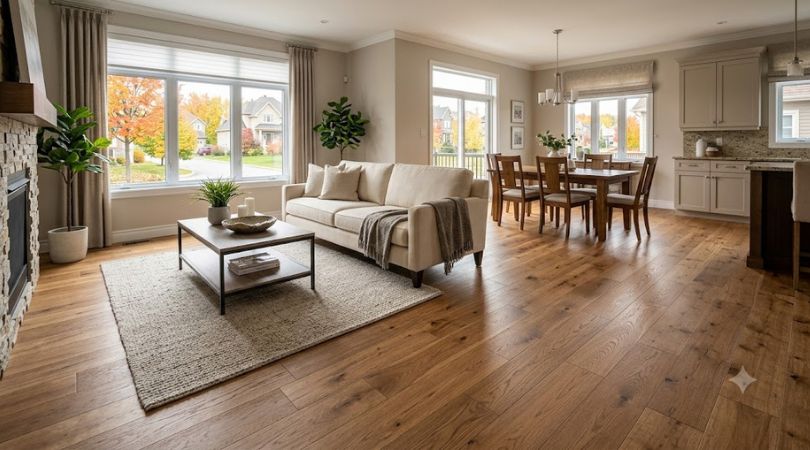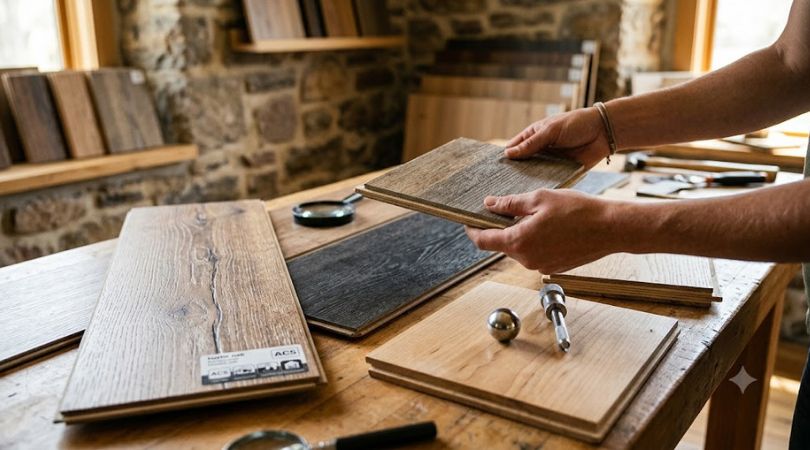

Hardwood floors in Quebec live or die by humidity. Keep the air in your home between 35 and 55% humidity from November through April, wipe up salt and slush as soon as it lands, and stick to gentle cleaners. Do those three things and a properly installed hardwood floor will last 50 years. Skip them and you’ll see gaps, cupping, white edge marks, and finish damage by year three.
This is the routine I give every Saint-Jerome client who buys solid or engineered hardwood, refined over four decades of February callbacks.
Why Quebec Winters Are Tough on Wood
Wood stays alive long after it leaves the sawmill. Each plank takes in and lets out moisture to match the air around it. In a Saint-Jerome winter, indoor humidity can drop to 15 or 22% if there’s no humidifier running. The wood lets go of moisture, shrinks slightly across the grain, and gaps open between planks.
Spring comes, the air bounces back to 50 or 65% humidity if no dehumidifier runs, the wood pulls that moisture back in, swells, and the gaps close. If the swing is mild, the floor returns to its summer shape. If it’s extreme, the wood remembers. Edges stay slightly raised. Boards cup. Finish cracks at the joints.
The Quebec building authority and the National Wood Flooring Association both point to 30 to 50% humidity as the safe range for hardwood. I push my clients a bit tighter, 35 to 55%, just for a comfort buffer. Below 30%, gaps will appear. Above 55%, you start risking swelling and mold.
Step One: Keeping the Humidity Right
A whole-home humidifier hooked into your furnace system is the gold standard for a Quebec hardwood owner. The simpler ones run automatically whenever the furnace cycles on. The more powerful “steam” units can target an exact humidity level rather than running on a percentage of furnace time.
If you don’t have a built-in humidifier, here’s what works:
- A 4 to 6 gallon-per-day portable humidifier will cover about 1,500 sq ft of open-plan space. Plan to refill it daily through January and February.
- Buy a $25 digital humidity meter (called a hygrometer) and put it in the room with the hardwood. Check it once a week. Adjust the humidifier based on what the meter actually reads, not what the dial on the machine says.
- Heat recovery ventilators (HRVs and ERVs) move air in and out of your home for fresh-air purposes. In winter, an HRV running too hard will dry the air. Set it to the minimum your code requires (usually a low continuous flow), not the maximum.
The single most useful tool in a hardwood home is the humidity meter. It costs less than a replacement plank and tells you exactly when to step in.
“The clients who hit their fifty-year mark on a solid floor aren’t the ones with the most expensive humidifier,” says Sefi Dollinger, Owner of Planchers Bellefeuille, serving Quebec homeowners since 1983. “They’re the ones who actually look at their humidity meter in January and act on what it says.”
Cleaning, the Short Version
The shorter list is the don’ts, so let’s start there.
Never:
- Wet-mop hardwood. Water seeps into the joints, lifts the finish, and stains the wood. Even sealed prefinished floors have micro-bevels at the edges that absorb water.
- Use vinegar, ammonia, oil soaps (like Murphy’s), or any acidic or alkaline cleaner. They strip or cloud the protective finish and make any future recoat harder.
- Use a steam mop on hardwood. Every manufacturer treats steam cleaning as a warranty violation.
- Polish or wax a floor that already has a modern (urethane) finish. The wax residue blocks future maintenance recoats.
- Drag furniture without felt pads. This is the single most common cause of scratches I see.
Always:
- Sweep or vacuum (hard-floor setting, no spinning brush) two or three times a week through winter.
- Use a microfiber dust mop daily in entry zones.
- When you mop, use a hardwood-specific cleaner. Bona Pro works on most floors. TORLYS floors get the TORLYS-approved cleaner. The bottle should specifically say hardwood.
- Wring out the microfiber pad until it feels almost dry to the touch before mopping. Damp, never wet.
- Wipe up melted snow, slush, and ice-melt residue right away. Salt residue is what causes most of the white edge marks I see in March.
The Entry Mat System That Saves the Finish
If I had to pick one thing that extends hardwood life through Quebec winters, it’s the entry mat setup. The math is simple. A 6-foot walk-off mat catches about 80% of the grit that would otherwise reach your finished floor. Sand and salt act like sandpaper, slowly grinding down the protective coat with every step.
Here’s the setup:
- A scraper mat (rough rubber or coir) outside the door for boots.
- A first mat just inside the threshold, at least 4 feet long.
- A second indoor mat about 2 feet beyond, lower pile.
- A boot tray with a raised drainage grid against the wall for snow and salt drip.
That gives you 6 to 8 feet of grit-catching zone before anyone reaches your hardwood. Yes, it’s a lot of mats. Yes, it looks like overkill in October. By March, you’ll be glad they’re there.
Stopping Gaps, Cupping, and Crowning Before They Happen
These are the three things Quebec hardwood owners worry about most. The cause is almost always humidity that wasn’t managed.
Gaps appear when the air drops below 30% humidity and the wood loses moisture across its width. Mild gaps in February that close back up by April are normal, not a defect. Permanent gaps mean the floor was installed at the wrong moisture level, or the humidity dropped too low for too long.
Cupping is when the edges of each board lift higher than the centre. The cause is almost always moisture coming up from below, like a damp basement, a plumbing leak, or a wet subfloor at install time. The fix is to find and stop the moisture source, then let the floor settle for 3 to 6 months. Sanding before it settles locks the cupping in permanently.
Crowning is the opposite, with the centre of each board higher than the edges. It usually means a previously cupped floor got sanded flat before it dried out, or the floor was finished while still too wet. Crowning rarely fixes itself and usually means the floor has to be replaced.
Beyond humidity, the day-to-day habits that protect a floor:
- Move area rugs every few months. UV light slowly fades unprotected wood, and rugs that never move leave permanent colour shadows.
- Put felt pads under every chair leg, sofa foot, and table base. Replace them every 6 to 12 months.
- Trim pet nails. A 75-pound dog with long nails on a softer wood species will leave visible dents within one winter.
- Lift furniture instead of sliding it when you rearrange.
- Don’t put a humidifier directly on hardwood. Sit it on a tray. Water splashes cause localized cupping fast.
A Simple Month-by-Month Winter Routine
| Month | What to do |
| September | Get the entry mats out and restocked. Replace humidity meter batteries. Check for any swelling left over from summer. |
| October | Start the humidifier as the furnace kicks on. Aim for 45% humidity. |
| November | Add more entry mat coverage. Bring out the boot tray. Start checking the humidity meter weekly. |
| December | Target 40 to 45%. Wipe salt and snow daily. Recheck the humidifier output mid-month. |
| January | Probably the driest indoor month of the year. Hold 35 to 45%. Refill portable humidifiers every day. |
| February | Maintain the humidity. Mild gaps are normal. Note any cupping for a spring check. |
| March | Peak salt and slush season. Mop more often. Empty the boot tray daily. |
| April | Start dialing back the humidifier. The meter should read 40 to 50% by month’s end. |
| May | Turn the humidifier off. Watch for too much humidity (over 60% means you need a basement dehumidifier). |
| June to August | Run a basement dehumidifier to keep the whole house under 55%. Refresh the finish if it’s scheduled. |
When to Give Us a Call
Three things usually need a professional eye:
- Cupping in any season. This is a moisture problem, and DIY fixes usually make it worse.
- Finish dulling, white haze, or a sticky residue. Often the result of the wrong cleaner, and the floor needs a deep clean before any recoat.
- Loose boards, hollow-sounding spots, or new squeaks. These usually point to a subfloor or fastener issue that gets worse fast.
If you’re trying to decide whether to refinish or replace, our hardwood vs engineered guide covers what’s realistic and the lifetime cost math.
FAQs
What Humidity Level Is Best for Hardwood Floors in Quebec?
35 to 55% relative humidity all year. In a Quebec winter, aim for the lower end of that range (35 to 40%) so you’re not over-humidifying when the outdoor air is bone dry.
How Often Should I Clean Hardwood Floors in Winter?
Sweep or dust mop entry zones daily, vacuum two or three times a week, mop lightly once a week with a hardwood-specific cleaner. Wipe up salty residue the moment you see it.
Can I Use Plain Water to Mop a Hardwood Floor?
No. Use a hardwood-specific cleaner with a microfiber pad wrung out until it feels almost dry. Water by itself seeps into the joints and damages the finish over time.
Do Gaps in Winter Mean My Floor Is Damaged?
Not necessarily. Mild seasonal gaps that close up by spring are normal for solid hardwood. Permanent gaps, gaps wider than 1/8 inch, or gaps with raised edges point to a humidity or installation problem.
How Long Should Hardwood Last in a Quebec Home?
With good care: solid hardwood 50 to 100 years with occasional refinishing. Engineered hardwood with a thick top layer (4 mm) 30 to 50 years, refinishable two or three times. Engineered with a thinner 2 mm top, 15 to 25 years before the veneer is too thin to sand.
Questions About Your Floor Specifically?
Bring a photo of any cupping, gaps, or finish damage to our Saint-Jerome showroom and we’ll walk through what’s normal seasonal movement and what actually needs attention. Free assessment, no appointment needed.
Planchers Bellefeuille | 450, boul. Roland-Godard, Saint-Jerome, QC