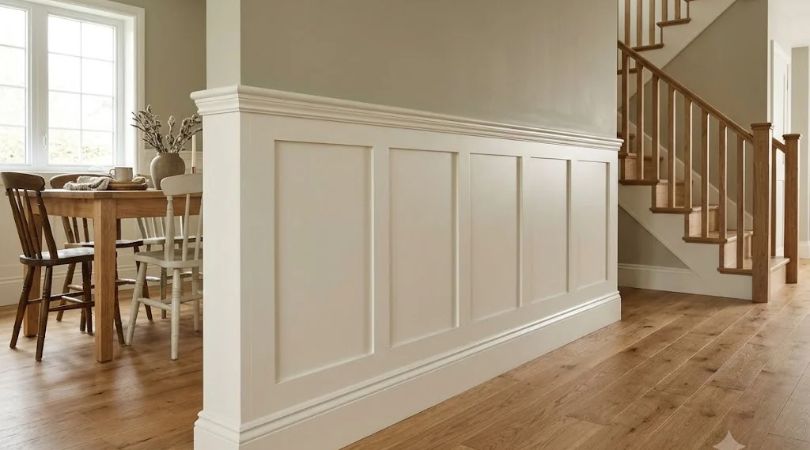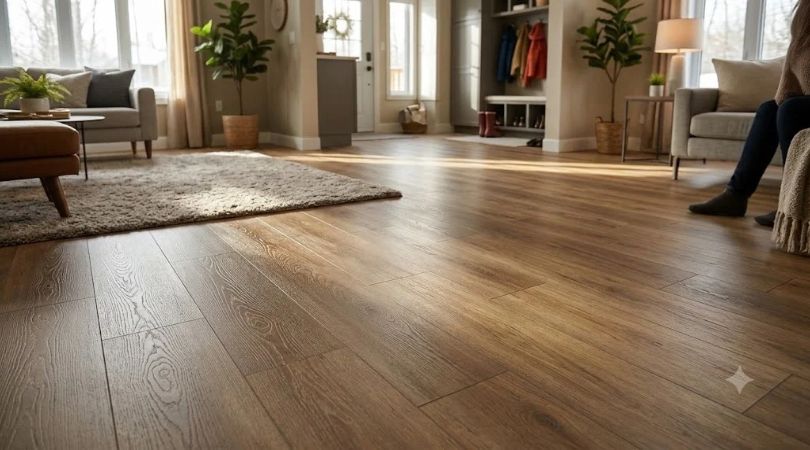

Red oak and white oak are both excellent floors, and the right one depends on the colour you want. Red oak has a warm pink undertone, a bolder grain, and costs less. White oak is slightly harder, has a neutral grey-tan tone with a tighter grain, and resists moisture better. Plan a dark stain and red oak is the value pick. Want pale or grey, choose white oak.
Two oaks, two very different looks
They share a name and a family, and from across a room a finished floor of either can look similar. Up close they are not the same wood, and the differences decide how your floor takes colour, hides wear, and ages. Here is the comparison first, then the detail behind each row.
| Factor | Red Oak | White Oak |
|---|---|---|
| Natural Colour | Light with a pink to reddish cast | Light tan with grey or olive undertones |
| Grain | Bold, open, pronounced cathedral pattern | Tighter, straighter, calmer |
| Janka Hardness | 1,290 | 1,360 |
| Moisture Resistance | Open pores; absorbs moisture more readily | Closed pores; resists water better |
| Takes Stain | Very evenly, with a warm result | Cleanly, with a cool, neutral result |
| Hides Scratches | Better; busy grain disguises marks | Good; less grain to camouflage marks |
| Material Cost | Lower | Higher by $1–$2 per sq. ft. |
| Best For | Warm, traditional looks and medium-to-dark stains | Pale, grey, natural finishes and modern looks |
Neither column is “better” wood. Both are durable North American hardwoods that will outlast most of the furniture that sits on them.
Colour and undertone differences
This is the row that should drive your decision. Red oak carries a distinct pink to salmon undertone in its natural state. Under a clear finish it reads warm and traditional, the classic oak floor in thousands of Quebec homes. Apply a medium or dark brown stain and the pink disappears into the warmth, which is why red oak looks so right in a traditional interior.
White oak starts from a cooler, more neutral base, light tan with a hint of grey or olive and no pink at all. That neutrality is why it has become the designer default: pale natural finishes, whitewashes, and grey or greige stains land exactly as intended. Try those same light or grey finishes on red oak and the pink undertone bleeds through, turning a grey stain faintly mauve. If your inspiration photos show pale, cool floors, they are almost certainly white oak.
Grain pattern and how it hides wear
Red oak has a more open, pronounced grain with wide, swirling cathedral patterns on plain-sawn boards. The busy figure gives the floor energy and, practically, does a better job of disguising scratches, dents, and dog claws, because the eye reads the marks as part of the pattern. For a family mudroom or a hallway with winter boots, that camouflage is a real benefit.
White oak’s grain is tighter and straighter, with less contrast between early and late wood, so the floor reads calmer and more continuous. In an open-concept main floor that calm is the whole point, because a busy grain multiplied across a large room can feel restless. Quarter-sawn white oak takes it further, showing linear grain with the shimmering ray fleck that defines mission and modern styles. Our hardwood grades guide explains how select and character grades change the amount of visible grain in either species.
Hardness and durability
On the Janka scale, which measures the force needed to embed a steel ball halfway into the wood, white oak scores 1,360 and red oak 1,290. That five percent difference is real but small. Both oaks are hard enough for a busy Quebec household, and neither will dent the way a softer species such as pine or cherry does. The National Wood Flooring Association publishes the full species table we work from.
The more meaningful durability difference is moisture. White oak’s pores are plugged with tyloses, which is why barrels are made from it and why a white oak floor tolerates spills and humid summer air better. Red oak’s open pores absorb moisture more readily, so it moves a little more with the seasons and needs the same 35 to 55 percent indoor humidity every wood floor needs, with slightly less margin. For a kitchen or a home near the lake, that difference nudges me toward white oak.
How each takes stain
Red oak is the easier wood to stain. Its open grain drinks stain evenly, the warm undertone blends with brown and amber tones, and the result is predictable. If you want a classic medium brown, a rich walnut tone, or a dark espresso floor, red oak gets you there for less money and the pink cast simply disappears.
White oak takes stain cleanly but behaves differently. Its closed grain absorbs less, so colours sit a touch lighter and cooler, which is exactly what pale and grey looks need. It is also rich in tannins, so it reacts to fuming and to reactive stains, producing deep, even browns and near-blacks that develop inside the wood rather than on top. Whichever oak you choose, test the stain on your actual boards under your room’s light. Our guide to floor colour and finish in Quebec light explains why the same sample looks different in January and July.
Cost and availability
Red oak is the more affordable oak, usually one to two dollars less per square foot for material, and it is the most widely available hardwood in Canada in every grade and width. For a large floor, that gap adds up to real money without sacrificing durability.
White oak costs more because demand for it has climbed and because rift and quarter-sawn cuts, the ones designers love, yield fewer boards per log. Wide white oak planks usually come in an engineered construction so they stay flat through the dry heating season, which adds cost again. Both species are stocked by the Quebec and North American mills we buy from, with short lead times for standard products. Our flooring cost guide breaks down what each costs installed.
The contrarian take from the showroom floor
“Everybody wants white oak right now, and half of them would be happier with red oak,” says Sefi Dollinger, Owner of Planchers Bellefeuille, serving Quebec homeowners since 1983. “If you are staining the floor a medium or dark brown, the pink in red oak vanishes, the grain hides your dog’s claws, and you just saved a couple of dollars a square foot. White oak earns its price when you want it pale, grey, or natural. Buy the oak for the colour you are actually going to put on it.”
Which oak for which room and style
Choose white oak for pale, natural, whitewashed, or grey finishes, for calm open-concept rooms, for kitchens and homes where moisture resistance matters, and for modern or Scandinavian interiors. Choose red oak for warm medium to dark stains, traditional or heritage homes, busy family spaces where a bold grain hides wear, and any project where budget matters and the finish will be brown anyway. In either case, keep indoor humidity between 35 and 55 percent and the floor will stay flat for decades. Both species are on our hardwood flooring page and side by side in the showroom.
Frequently asked questions
Which is better, red oak or white oak flooring?
Neither is better overall. White oak is slightly harder, resists moisture better, and has a neutral tone that suits pale and grey finishes. Red oak costs less, stains evenly in warm tones, and its bolder grain hides scratches. Choose by the colour you plan to finish the floor.
Is white oak harder than red oak?
Slightly. White oak scores 1,360 on the Janka hardness scale and red oak 1,290, about a five percent difference. Both are hard enough for a busy family home. The more practical difference is white oak’s closed grain, which resists water better than red oak’s open pores.
Can you tell red oak from white oak once it is stained?
With a medium or dark stain, often not. The pink undertone of red oak disappears under brown tones and the grains look similar from standing height. With pale, natural, or grey finishes the difference is obvious: red oak reads pink or mauve and white oak reads neutral and cool.
Does red oak look pink?
In its natural state, yes, red oak has a light pink to salmon undertone, which is why pale and grey stains can turn muddy on it. Under a medium or dark brown stain the pink blends into the warmth and is not noticeable. Oil-based finishes also warm it further over time.
Which oak hides scratches better?
Red oak, because its bolder, more open grain pattern disguises scratches, dents, and pet claw marks as part of the figure. White oak’s calmer grain shows marks a little more, though a matte finish and a character grade with knots close most of that gap.
Is white oak more expensive than red oak?
Yes, typically by one to two dollars per square foot for material. Demand for white oak is high, and rift and quarter-sawn cuts yield fewer boards per log. Wide white oak planks usually need an engineered core, which adds cost again. Red oak is the value oak.
Which oak is better for a kitchen?
White oak, by a small margin. Its closed pores resist spills and humidity better than red oak’s open grain, and its neutral colour suits most kitchen palettes. Red oak works fine in a kitchen too if spills are wiped promptly and indoor humidity stays between 35 and 55 percent.
Can you mix red oak and white oak in the same home?
It is better not to put them side by side, because the undertones differ and the transition will show. If you must match an existing red oak floor, use red oak. If you are refinishing both with a medium or dark stain, the difference can be hidden, but test first.
Bring your inspiration photo to the Saint-Jerome showroom and we will tell you in ten seconds which oak it is, and finish a sample to match.
450, boul. Roland-Godard, Saint-Jerome, QC | (450) 431-8789 | planchersbellefeuille.com