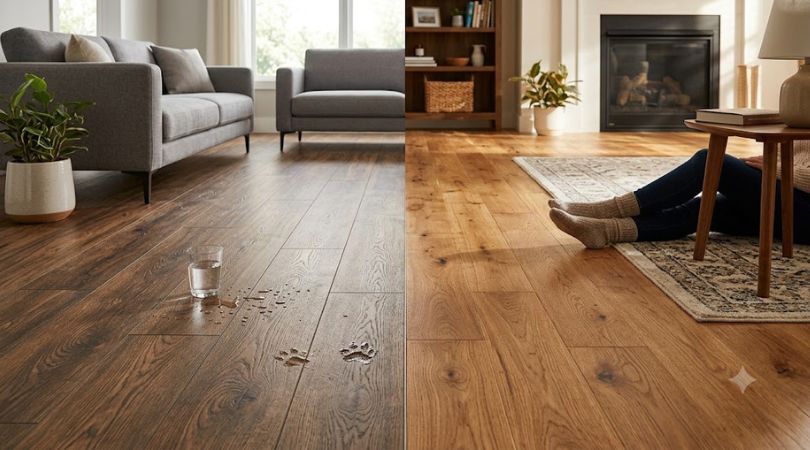

For most Quebec homes, a mid-tone floor in a matte or satin finish is the safe, timeless choice. Light floors hide dust and scratches and make small or north-facing rooms feel bigger. Dark floors look rich and dramatic but show every speck and footprint. Matte and satin finishes hide wear and read modern; high gloss looks formal but reveals every scratch. The right answer depends on your light, your room size, and how much cleaning you want to do.
The two decisions people rush
Choosing a floor, most people fixate on the wood species and forget that two other choices will shape the room just as much: the colour and the sheen. These are the decisions clients most often make on impulse in a showroom and most often second-guess at home, because a small sample under bright store lighting behaves nothing like a whole floor under Quebec’s changing daylight.
Slow down on both. Colour sets the mood and the maintenance reality of the room. Sheen decides how the light moves across the floor and how visible every scratch and crumb will be. Get these two right and a modest floor looks intentional. Get them wrong and even beautiful wood feels off.
How Quebec light changes everything
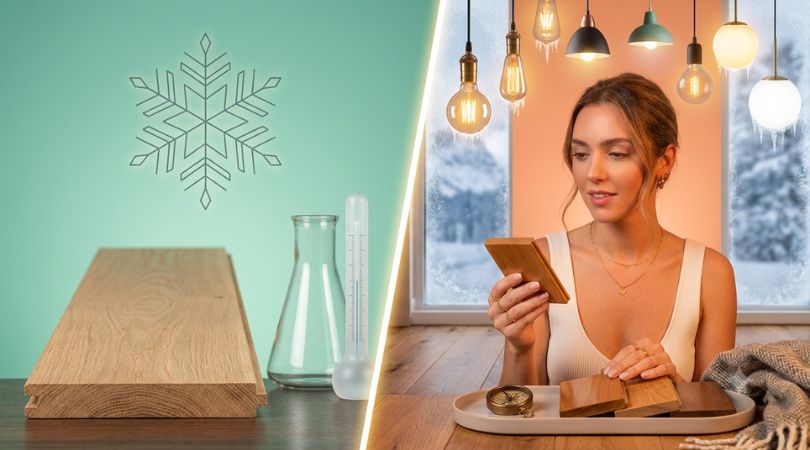
This is the factor most colour guides ignore, and in Quebec it is decisive. Our light shifts dramatically across the year. A low winter sun sits at a sharp angle and floods rooms with cool, bright, reflected light off the snow. A high summer sun brings warmer, more direct light. And our winters are long, so for months the house lives under grey skies and short days.
That seasonal swing means a floor colour has to work under both extremes. A tone that looks warm and inviting in July can read cold and flat under a January overcast. North-facing rooms, which get soft, cool, indirect light all year, pull colours cooler and can make a dark floor feel heavy and a room feel smaller. South-facing rooms take warm, strong light that can wash out a pale floor and fade it over time. Before you commit, look at a large sample in the actual room, at morning and evening, on a sunny day and a grey one. What you learn will override any showroom impression.
Light floors: forgiving and expansive
Light floors, from pale Scandinavian oak to natural blonde maple, do several practical things well. They hide dust, pet hair, and fine scratches, because there is little contrast between the floor and the debris on it. They reflect light, which makes a room feel larger and brighter, a real advantage in a small space or a north-facing room starved of sun through our long winters. And they read casual, current, and calm.
The tradeoffs are honest. Light floors can show darker spills and stains more than a mid-tone, and very pale floors can feel cold or clinical if the rest of the room is not warmed up with texture and colour. But for a family that wants low-maintenance and an open, airy feel, especially in a house that spends months under grey skies, light is often the smart choice.
Dark floors: rich and demanding
Dark floors, from espresso to deep walnut tones, deliver drama and richness that nothing else matches. They anchor a room, make furniture and rugs pop against them, and read as luxurious and formal. In a large, well-lit room with high ceilings, a dark floor can be stunning.
They are also the highest-maintenance colour by a wide margin. Dark floors show everything: dust, pet hair, footprints, crumbs, and the fine scratches that catch light. In a busy household with kids and dogs, a dark floor can look dirty an hour after you clean it. They also make a small or dimly lit room feel smaller and heavier. I do not talk clients out of dark floors, but I make sure they know what daily upkeep they are signing up for, and I steer them toward a matte finish to soften the worst of it.
Mid-tone: why it is the default for a reason
Between the extremes sits the mid-tone floor, natural to medium browns, warm honey tones, greige, and the popular cool-brown oaks. There is a reason this is the most-requested range in our showroom. Mid-tones hide dust and scratches nearly as well as light floors, avoid the smothering maintenance of dark floors, and flatter almost any wall colour, cabinet, and furniture style.
A mid-tone also ages gracefully through our seasons, holding its character under both bright winter reflection and warm summer sun. If you want a floor you will not second-guess in five years, and you do not have a specific reason to go light or dark, a mid-tone in a matte or satin finish is the choice that almost never disappoints.
Sheen: the decision that hides or reveals wear
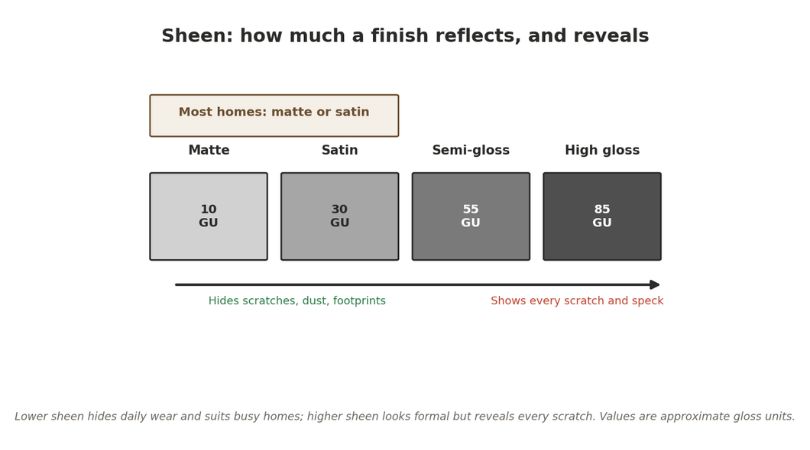
Finish sheen is the quieter of the two choices and arguably the more important for daily life. Sheen is how much light the finish reflects, and it runs from matte through satin to semi-gloss and high gloss. Here is how they behave.
| Sheen | Look | Shows Scratches and Dust | Best For |
|---|---|---|---|
| Matte | Natural, modern, soft | Hides them best | Busy homes, pets, kids, and contemporary interiors |
| Satin | Slight soft glow, warm | Hides most | The versatile all-rounder for almost any home |
| Semi-Gloss | Noticeable shine, traditional | Shows more | Formal rooms and lower-traffic spaces |
| High Gloss | Mirror-like, dramatic | Shows everything | Statement spaces and formal rooms; rarely ideal for busy family homes |
The trend and the practical advice both point the same way for most homes: matte or satin. A matte finish looks current, feels natural underfoot, and hides the scratches, dust, and footprints that a glossy floor broadcasts. High gloss is beautiful in a formal, low-traffic room, but in a family kitchen it becomes a full-time cleaning job and a map of every scuff. For a pet household in particular, a matte or satin sheen is the clear call, and it improves grip for dogs too.
Colour and sheen together
The two choices interact, and pairing them well is the whole game. A dark floor in high gloss is the highest-maintenance combination possible, a beautiful surface that shows every particle and every scratch. The same dark tone in matte becomes far more livable, softening the contrast that makes debris jump out.
A light floor in matte is the lowest-maintenance combination, forgiving on both colour and sheen, which is why it has become the default for young families. A mid-tone in satin is the balanced middle, warm and refined without demanding constant care. Think of colour and sheen as one decision, not two, and match them to how hard the room will be used.
Match the floor to the wood, not just the swatch
One practical caution: the same stain colour looks different on different species, because the wood’s own grain and undertone show through. A grey stain on white oak reads clean and even; the same grey on hickory or maple can blotch, because those species resist stain unevenly. If you have your heart set on a specific colour, choose a species that takes it well, and always approve a large sample in that exact species, not a generic colour chip. Our hardwood flooring page covers how different species behave with colour.
A simple way to decide
If you want the lowest-maintenance, most future-proof floor, choose a mid-tone in matte or satin, and you will rarely regret it. If your room is small or north-facing and you want it to feel bigger and brighter through our grey winters, go lighter. If you have a large, bright, formal room and you are ready to maintain it, a dark floor delivers drama. Whatever the colour, lean toward matte or satin sheen for any home with real daily life in it, and reserve gloss for formal, low-traffic spaces. Above all, judge every choice on a large sample in the actual room, in real Quebec light.
The showroom take
“I watch people fall for a dark, glossy floor under our showroom lights, and I always make them take a big sample home first,” says Sefi Dollinger, Owner of Planchers Bellefeuille, serving Quebec homeowners since 1983. “Half of them come back and choose a mid-tone matte instead, because they saw what that glossy espresso would look like in their own kitchen under a grey January sky, with a dog and two kids. Beautiful in the store, exhausting at home. The floor that still looks great in year five is almost always a warm mid-tone in a matte finish. It is not the flashy pick. It is the one nobody regrets.”
Frequently asked questions
Are light or dark hardwood floors better?
Neither is universally better. Light floors hide dust and scratches, make rooms feel bigger, and suit small or north-facing spaces. Dark floors look rich and dramatic but show every speck and need far more cleaning. Mid-tones balance both.
Do dark floors show more dirt?
Yes, significantly. Dark floors reveal dust, pet hair, footprints, crumbs, and fine scratches because of the high contrast. In a busy home they can look dirty soon after cleaning. A matte finish softens this but does not eliminate it.
What floor colour is easiest to maintain?
A mid-tone in a matte or satin finish. Mid-tones hide dust and scratches without the heavy maintenance of dark floors, and matte sheen conceals wear. This combination is the lowest-maintenance choice for most family homes.
Is matte or glossy finish better for hardwood floors?
Matte or satin for most homes. They hide scratches, dust, and footprints, feel natural underfoot, and read modern. High gloss looks formal but reveals every particle and scratch, making it high-maintenance in a busy household.
What flooring makes a small room look bigger?
A light floor in a matte finish. Light tones reflect more light and reduce contrast, which makes a space feel larger and brighter, especially valuable in small or north-facing rooms during Quebec’s long, grey winters.
Do glossy floors scratch more easily?
They do not necessarily scratch more, but they show scratches far more, because the reflective surface highlights every mark. Matte finishes hide the same scratches. For pets and kids, matte or satin is the practical choice.
What is the most timeless floor colour?
A warm mid-tone, from natural brown to honey oak. It flatters most interiors, hides everyday wear, and reads well under both bright winter light and warm summer sun. It is the choice least likely to feel dated in a decade.
How does Quebec light affect floor colour?
Strongly. Winter light is cool and bright off the snow; summer light is warm and direct; and long grey stretches flatten colours. North-facing rooms pull tones cooler. Always test a large sample in the actual room across different times and weather.
Does the same stain look the same on every wood species?
No. Grain and undertone show through, so a stain reads differently on oak than on hickory or maple, and some species blotch with dark stains. Choose a species that takes your target colour well and approve a sample in that exact species.
What sheen is best for a house with pets?
Matte or satin. Both hide the scratches pets cause and improve grip for dogs. High gloss shows every claw mark and is slippery, making it a poor choice for a pet household.
Should floors match the wall colour?
They should complement, not match. A floor and walls in the same tone can feel flat. Contrast, whether a lighter floor against darker walls or the reverse, adds depth. A versatile mid-tone floor works with almost any wall colour.
Will a south-facing room fade my floor?
It can. Strong, direct southern light can fade and wash out floor colour over time, more noticeably on darker and richer tones. Use blinds or UV-filtering film on south windows, and rotate rugs so the floor ages evenly.