
Hardwood grade describes how much natural variation a floor shows, not how good the wood is. A select grade is clean and uniform, with few knots and even colour. A character or rustic grade shows more knots, streaks, and colour range. Every grade is structurally sound. Grade is a look you choose, not a quality tier, and the right one depends entirely on the style you want.
Grade Is The Single Most Misunderstood Word In Flooring
Homeowners hear “select grade” and assume it means the best wood, while “rustic” must mean seconds or damaged boards. That is wrong, and it costs people the floor they actually wanted. Grade sorts boards by appearance alone. It counts knots, mineral streaks, colour variation, and small natural features, then groups the wood into tiers from clean to characterful. A rustic board is not weaker or lower quality than a select board. It simply shows more of the tree’s story. In fact, a busy character grade hides scratches, dents, and everyday wear far better than a flawless select floor, which is why it is often the smarter pick for a family home. Once you understand that grade is a style decision, choosing gets easier and cheaper, because you can match the grade to how the room really lives.
The Grades From Clean To Characterful
Different mills use different names, but they map onto the same spectrum. For a clean and formal look, the common grade names are Select, Distinction, and Prestige, and you see even colour, minimal knots, and uniform grain. For a balanced, natural look, the names are Character, Authentic, and Excel, and you see some knots and colour variation with a real wood look. For a rich and rustic look, the names are Rustic, Advantage, and Country, and you see frequent knots, streaks, and a wide colour range. Notice that a name like Prestige or Distinction sits at the clean end, while Advantage sits at the rustic end, even though both come from the same quality wood. Ask what the grade looks like, not just what it is called, because the marketing names vary from brand to brand.
How Grade Changes The Whole Feel Of A Room
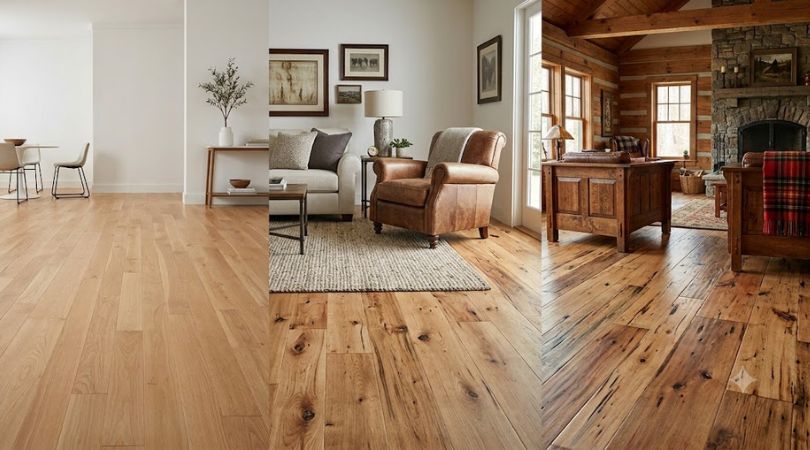
The same species in two different grades can read as two completely different floors. A select-grade white oak floor looks calm, wide, and formal, the clean canvas you see in a modern minimalist home or a high-end condo. Move the same white oak to a character grade and it warms up immediately, with knots and colour swings that feel handcrafted and lived-in. Push to rustic and it becomes the star of the room, full of movement, perfect for a country home, a chalet, or a space that wants texture. None of these is more durable than the others. You are choosing the personality of the floor, so picture the room’s style first, then pick the grade that fits it.
Check Out – Prefinished vs Site-Finished Hardwood: Which Should You Choose?
Matching Grade To How The Room Lives
Grade is not only about taste, it is about maintenance reality. For a busy family with kids, pets, and a mudroom full of winter boots, a character or rustic grade is the practical choice, because its natural knots and colour variation camouflage the scratches and dents that a clean select floor would show off. For a formal living room, a primary bedroom, or a minimalist space where you want the floor quiet and the furniture loud, select grade delivers that calm, uniform look. Many Quebec homeowners split the difference: a clean grade in the formal front rooms, a forgiving character grade through the kitchen and family space where life actually happens.
Grade Under Quebec’s Changing Light
One factor local homeowners forget is light, and it changes how a grade reads through the year. Our winter light is low, cool, and short, while summer light is long and warm, and both fall differently across a floor. A high-variation rustic grade can look busy and dark under flat winter light, then come alive in summer sun. A clean select grade stays consistent year round but can feel stark in a room that gets little natural light in January. When customers walk our Saint-Jerome showroom, I always pull the sample toward the window and then into a dim corner, because the same board tells two stories. See the grade in the light your room actually gets before you commit.
What I Steer People Toward?
“When someone tells me they want the highest quality floor, I ask what they mean, because grade has nothing to do with quality,” says Sefi Dollinger, Owner of Planchers Bellefeuille, serving Quebec homeowners since 1983. “I have laid rustic-grade floors in million-dollar homes and select-grade floors in starter condos. The knots in a character board are not flaws, they are the reason it will still look great after your dog and your kids have done their worst. Pick the look you love and the traffic you have. That is the whole secret.”
Also Read – How to Choose the Right Flooring for High-Traffic Areas
Frequently Asked Questions
1. Does hardwood grade affect quality or durability?
No. Grade describes appearance only, how many knots, streaks, and colour variations a floor shows, not the strength or lifespan of the wood. A rustic-grade floor is just as durable as a select-grade floor of the same species. Choose grade based on the look you want, not on a quality ranking.
2. What is the difference between select and character grade?
Select grade is clean and uniform, with even colour and few knots, for a calm, formal look. Character grade shows more knots, mineral streaks, and colour variation, for a warmer, natural, lived-in look. Both use sound wood. Character grade also hides everyday scratches and dents better than select.
3. Is rustic-grade hardwood lower quality?
No. Rustic grade simply shows the most natural variation, with frequent knots, streaks, and a wide colour range. The wood is structurally equal to cleaner grades. Many homeowners choose rustic on purpose for its rich, textured look and its ability to camouflage wear in a busy home.
4. Which hardwood grade hides scratches best?
Character and rustic grades hide scratches, dents, and everyday wear best, because their knots and colour variation break up the surface and disguise marks. A clean select-grade floor shows every scratch against its uniform surface, so busy family homes and homes with pets usually do better with a more characterful grade.
5. Do grade names mean the same thing across brands?
No. Each manufacturer uses its own names, so Prestige or Distinction from one mill and Select from another may all describe a clean grade, while Advantage or Country describes a rustic one. Always ask to see the actual grade rather than relying on the name, since the marketing terms vary.
6. Which grade is best for a family home?
A character or rustic grade is usually best for a family home, because its natural variation hides the scratches and dents that come with kids, pets, and winter traffic. Save clean select grade for low-traffic formal rooms where you want a calm, uniform surface and can protect it from heavy wear.
7. Does grade change the price of hardwood?
It can, but not in a simple ranking. Cleaner grades sometimes cost more because more of the tree is culled to achieve a uniform look, but pricing varies by species, brand, and availability. Two grades of the same species can also cost the same. Compare actual prices rather than assuming clean equals expensive.
8. Can I mix grades in the same home?
Yes, and many Quebec homeowners do. A clean select grade suits formal front rooms, while a forgiving character grade works through kitchens, family rooms, and high-traffic areas. Keep the same species and finish across the home so the grades read as a deliberate choice rather than a mismatch.
Bring your room’s light to mind and come see the grades in person. Our Saint-Jerome showroom lets you compare select, character, and rustic side by side.
450, boul. Roland-Godard, Saint-Jerome, QC | (450) 431-8789 | planchersbellefeuille.com