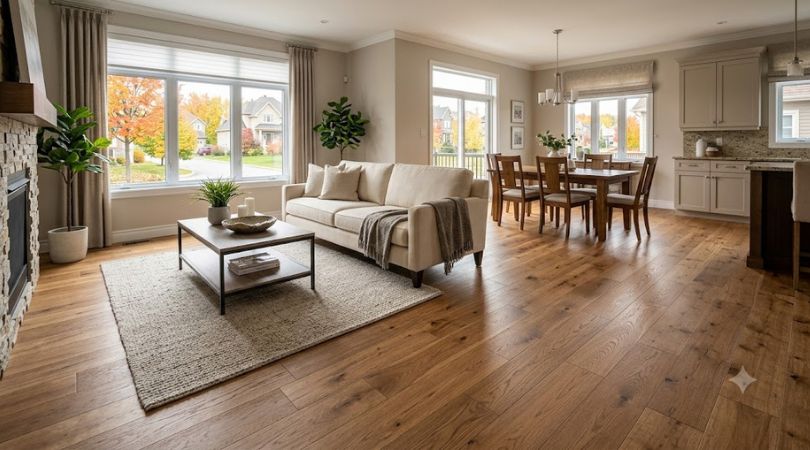
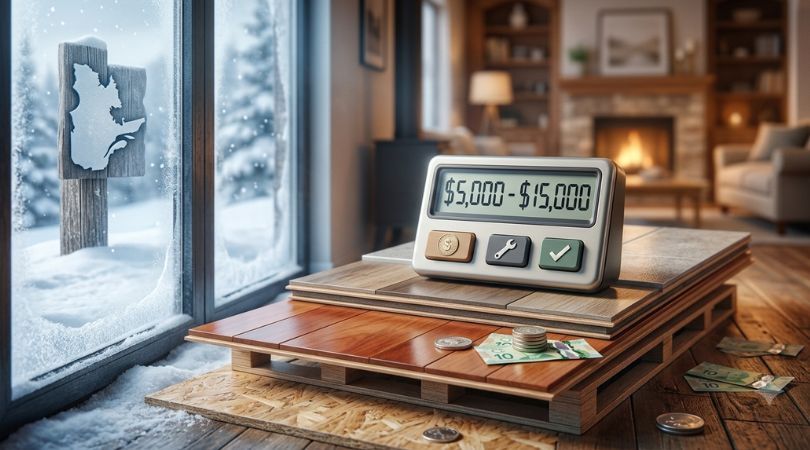
New flooring in Quebec typically costs between 3 and 20 dollars per square foot installed, depending on the material. Laminate and vinyl sit at the low end, engineered and solid hardwood in the middle to upper range, and porcelain tile at the top. Material is only part of it. Subfloor prep, old-floor removal, and stairs move the final number as much as the product you choose.
Why One Price Never Fits Your Floor?
Ask what flooring costs and you will get a shrug, because the honest answer is “it depends,” and it depends on more than the product. Two homes can install the same hardwood and pay wildly different totals. The material sets your starting point, but the condition of what is underneath, the size and layout of the job, and the extras like stairs and transitions all move the number. A flat, clean subfloor in a big open rectangle is cheap to cover. An uneven slab, a warren of small rooms, and a staircase to match will add thousands. So think in two buckets from the start: the material cost you can shop for, and the labour and prep cost that depends on your specific home. Budget for both, and you will not be surprised when the quote arrives.
Typical Installed Cost By Material
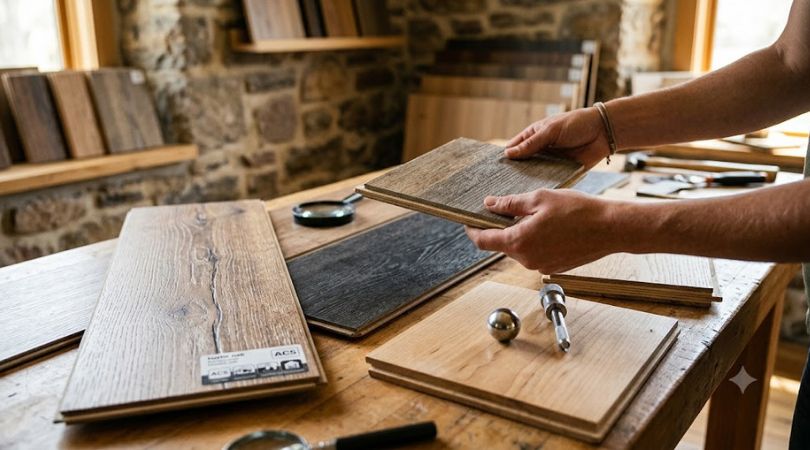
These are the ranges we see in our market for material plus standard installation. Laminate runs 3 to 7 dollars per square foot, budget-friendly, with water-resistant options costing more. Luxury vinyl, SPC or WPC, runs 5 to 10 dollars, waterproof, with a wide range by wear layer. Cork runs 6 to 12 dollars, warm and quiet, mid-range. Engineered hardwood runs 8 to 16 dollars, real wood, with wear layer and width driving price. Solid hardwood runs 9 to 18 dollars, refinishable, with species affecting cost. Porcelain tile runs 10 to 20 dollars, most durable, and labour-intensive to set. Treat these as a planning guide, not a quote. Wider planks, thicker wear layers, premium species, and intricate patterns like herringbone push the top of each range higher.
The Costs People Forget To Budget
The sticker price on the box is rarely the whole bill. Three extras catch homeowners off guard, and they are worth planning for up front. Subfloor preparation is the big one. If the existing surface is uneven, damaged, or a slab that needs levelling or moisture management, that work happens before your new floor goes down, and it adds real cost. Removal and disposal of the old floor, especially glued-down tile or multiple layers, takes labour and dump fees. Stairs, transitions, and trim are priced separately and add up fast, because stairs are slow, detailed work. On a Quebec job, a slab that needs a moisture barrier or a staircase to match the new floor can swing the total by thousands, so ask about all three when you get a quote.
Where To Save And Where To Spend?
A smart budget is not the cheapest floor everywhere, it is the right spending in the right rooms. Spend where durability and water resistance pay off: a quality wear layer in the kitchen and entry, real engineered wood in the main living spaces you see every day. Save where traffic is light: a mid-range vinyl or laminate in a guest room, a basement, or a rental unit gives a great look at a lower price. Do not save on the parts you cannot easily redo, like subfloor prep and moisture management, because cutting there causes the failures that cost the most later. In our showroom, I often help a family put the budget into the main floor and choose a smart, cheaper option downstairs, which gets them a beautiful home without overspending.
Also Read – Best Flooring for Kitchen in Quebec Homes
How To Get A Quote You Can Trust?
An accurate quote is measured, not guessed over the phone. To compare fairly, make sure each estimate covers the same scope. Ask for the price broken into material, installation labour, subfloor prep, old-floor removal, and any stairs or transitions, so you can see where the money goes and compare apples to apples. Confirm the product’s exact wear layer or grade, since a cheap-looking quote often hides a thin, short-lived product. And verify the installer is licensed by the Regie du batiment du Quebec, because a proper installation protects your warranty and your home. A detailed written quote from a licensed installer is worth more than the lowest number on a napkin.
The Straight Talk On Flooring Budgets
“The cheapest quote is almost never the cheapest floor, because someone left the subfloor prep out to win the job,” says Sefi Dollinger, Owner of Planchers Bellefeuille, serving Quebec homeowners since 1983. “I would rather give a homeowner the real number up front than a low one that grows on install day. Put your money into the main-floor material and the prep you cannot see, save on the guest room, and never cut corners on the moisture work under a slab. Do that and your budget buys a floor that lasts, not a bargain you replace in five years.”
Frequently Asked Questions
How much does flooring cost per square foot in Quebec?
Installed, most flooring runs 3 to 20 dollars per square foot. Laminate is 3 to 7, luxury vinyl 5 to 10, cork 6 to 12, engineered hardwood 8 to 16, solid hardwood 9 to 18, and porcelain tile 10 to 20. These are planning ranges. Your quote depends on the product, subfloor condition, and job complexity.
What is the cheapest flooring option?
Laminate is generally the cheapest hard-surface flooring, starting around 3 dollars per square foot installed, followed by entry-level luxury vinyl. Both give a durable, attractive floor at a low price. Vinyl has the edge in wet areas because it is waterproof, while laminate is best kept to dry rooms unless it is a water-resistant product.
Does the price include installation?
It depends on how the quote is written, which is why you should always ask. Some prices are material only, and some are installed. A trustworthy quote breaks the cost into material, installation labour, subfloor prep, and removal so you can see the full scope. Confirm what is and is not included before comparing quotes.
Why is hardwood more expensive than vinyl?
Hardwood costs more because it is real wood, milled from trees, with pricing that rises for premium species, wider planks, and thicker wear layers, plus it takes more skilled labour to install. Vinyl is manufactured in large volumes and often clicks together over the subfloor. Hardwood also lasts decades and can be refinished, which vinyl cannot.
What hidden costs come with new flooring?
The main hidden costs are subfloor preparation, such as levelling or moisture management, removal and disposal of the old floor, and stairs, transitions, and trim, which are priced separately. On a Quebec job, slab moisture work or a matching staircase can add thousands. Ask about all of these when you request a quote.
How much does it cost to install hardwood on stairs?
Stairs are priced per step, not per square foot, because each tread and riser is slow, detailed work. A staircase to match a new hardwood floor commonly runs a few hundred dollars or more per step depending on the design and whether risers and a railing are involved. Always ask for stairs to be quoted separately.
Is it cheaper to install flooring myself?
Doing it yourself saves labour but risks the mistakes that cost the most, especially skipping proper subfloor prep or moisture management, which can void a warranty and ruin the floor. Click-together vinyl and laminate are the most DIY-friendly. Hardwood, tile, and any glue-down or nail-down floor usually pays for professional installation.
How do I budget for a whole-home flooring project?
Start with the ranges above times your square footage for material and install, then add for subfloor prep, old-floor removal, and stairs. Spend more on high-traffic main rooms and the prep you cannot see, and save on low-traffic spaces. Get a detailed written quote from a licensed installer so the number reflects your actual home.
Bring your room measurements to Saint-Jerome and we will give you a clear, itemized quote with no surprises on install day.