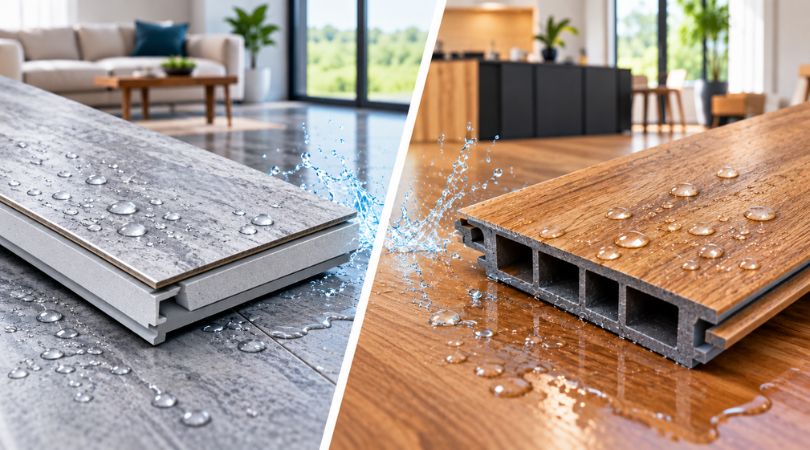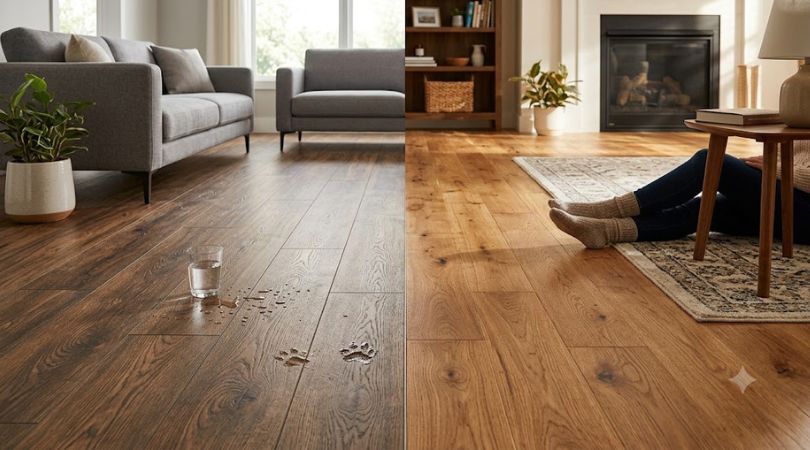

The best kitchen flooring for most Quebec homes is rigid SPC vinyl or porcelain tile, because both are waterproof, tough, and easy to clean. Engineered hardwood is the top choice if you want real wood and will wipe up spills promptly. Solid hardwood and laminate can work but carry more risk around water. The kitchen is the hardest-working floor in the house, so the decision comes down to how it handles water, standing, dropped objects, and constant traffic.
Why The Kitchen Is The Toughest Floor In The House
No other room asks as much of a floor. The kitchen gets the heaviest foot traffic, the most spills, dropped pots and knives, splashes at the sink, temperature swings by the stove, and hours of standing while you cook. A floor that is perfect in a bedroom can fail within a year in a kitchen.
That is why the kitchen deserves its own decision rather than defaulting to whatever runs through the rest of the house. The priorities shift here. Water resistance, durability, and easy cleaning move to the top, and comfort underfoot matters more than in any other room because of how much time you spend standing on it.
The Five Things A Kitchen Floor Has To Handle
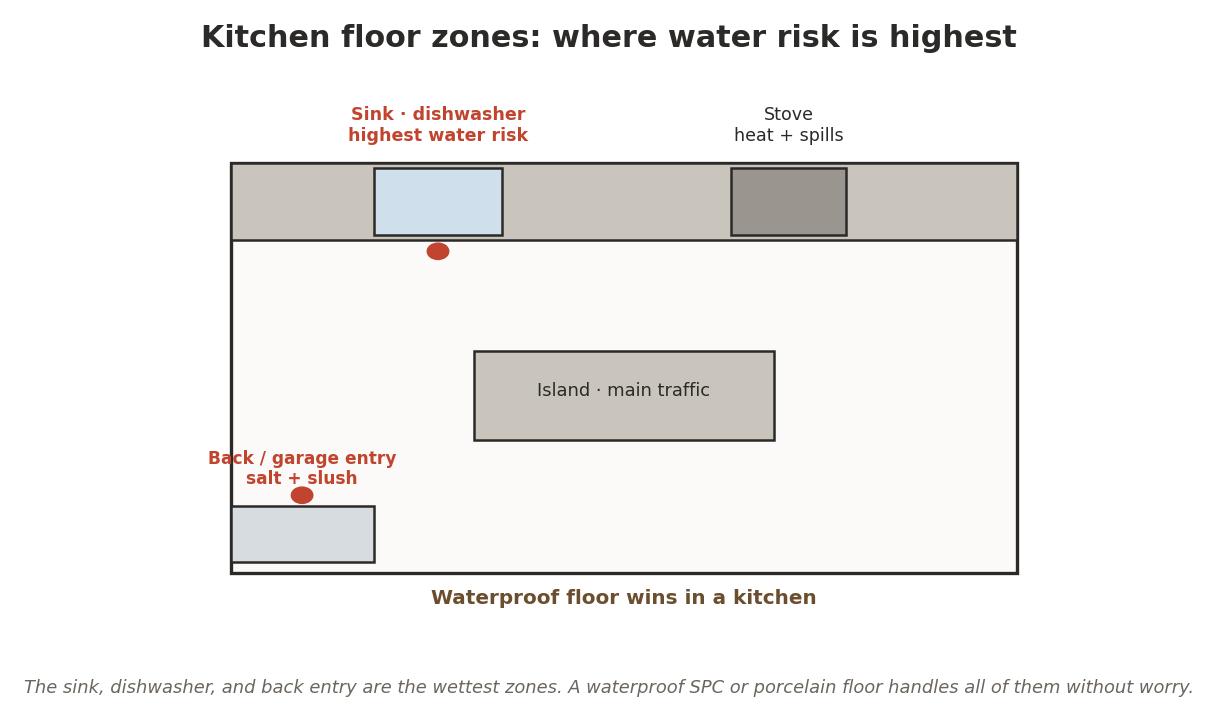
Break the demands into five and the ranking of materials becomes clear. A good kitchen floor manages all five, not just one or two.
- Water and spills:the sink splashes, the dishwasher can leak, and drips are constant. This is the single biggest factor.
- Durability:dropped cans, pots, and knives, plus daily heavy traffic, punish a soft floor.
- Cleaning:food, grease, and sticky spills mean you need a surface that wipes clean without special care.
- Comfort:you stand for long stretches, so a floor with a little give is easier on your legs and back.
- Look:the kitchen is often the heart of an open-concept home, so it has to look good and often flow into adjoining rooms.
The Materials Ranked For A Kitchen
Here is how the realistic options perform against everything a kitchen throws at them.
SPC vinyl leads because it does everything a kitchen needs and stays warm underfoot, which counts in a Quebec winter. Porcelain is the most durable and fully waterproof, but it is hard and cold on the legs without radiant heat below it. Our luxury vinyl page and porcelain flooring page show the lines we carry.
Can You Really Put Hardwood In A Kitchen?
Yes, with clear eyes. Hardwood in a kitchen is a genuine and popular choice, especially in an open-concept home where you want the floor to run seamlessly from the living room through the kitchen without a break. It is warm, beautiful, and refinishable, and plenty of Quebec kitchens have hardwood that has lasted decades.
The rules make it work. Choose engineered over solid, because its cross-plied core resists the moisture and temperature swings a kitchen creates. Pick a hard species like white oak, whose tight, closed grain resists water better than open-grained red oak. Insist on a durable factory finish, keep a mat at the sink, and wipe spills the moment they happen. Do that and hardwood is a fine kitchen floor. Skip the discipline, especially with solid wood, and a slow dishwasher leak can cup a whole section. Our engineered hardwood page covers the constructions built for this.
Comfort Underfoot: The Factor People Forget
Ask anyone who cooks a lot and they will tell you their feet know the difference between floors. You stand in a kitchen more than any other room, and a hard, unforgiving floor makes long cooking sessions harder on your knees, hips, and back.
Porcelain tile, as durable as it is, is the hardest and coldest option, and on a concrete slab it can be punishing without an anti-fatigue mat or radiant heat beneath it. SPC vinyl has a slight give and stays warmer to the touch. Engineered hardwood and cork are the most comfortable underfoot. If you cook for hours or have joint issues, weigh comfort heavily, or plan for radiant heat under tile to solve the cold at least. In a Quebec winter, a warm kitchen floor is a daily pleasure, not a luxury.
The Quebec Climate Angle
Two climate factors touch a kitchen floor here. First, humidity: our winters drop indoor air below 30 percent, and a wood floor shrinks and can gap in that dry air. Hold the home between 35 and 55 percent relative humidity year round with a humidifier and a hygrometer to protect any wood kitchen floor. Second, the entry effect: kitchens often sit near a back door or garage entry where road salt, slush, and wet boots arrive all winter. A waterproof floor near that traffic path saves you grief. Our cold climate flooring guide covers the humidity discipline in depth.
Matching The Kitchen To The REST Of The House
In an open-concept home, the kitchen floor is often visible from the living and dining areas, so it has to belong to the whole space, not just function on its own. This is where SPC vinyl and engineered hardwood shine, because both come in convincing wood looks that can run continuously from the kitchen through the adjoining rooms with no transition, which makes the whole floor feel larger and more cohesive.
If you prefer tile in the kitchen for its durability but wood elsewhere, plan the transition deliberately, ideally at a doorway or a natural break in the sightline rather than mid-room. A thoughtful transition looks intentional; an awkward one chops the space up. Our high-traffic flooring guide covers durability across connected spaces.
What I Would Choose, By Household
For a busy family that wants low worry, SPC vinyl in a 20 mil wear layer is the pick: waterproof, warm, tough, and forgiving of everything a family kitchen produces. For a household that wants maximum durability and does not mind the hardness, porcelain tile lasts essentially forever and shrugs off water and heat. For someone who wants real wood and an open-concept flow, engineered white oak with a good finish and disciplined spill cleanup is the answer. And for a tight budget, a quality water-resistant laminate is a real kitchen floor as long as spills get wiped promptly.
The Honest Recommendation
“The kitchen is where I see the most flooring regret, and it is almost always the same story,” says Sefi Dollinger, Owner of Planchers Bellefeuille, serving Quebec homeowners since 1983. “Someone puts a beautiful solid hardwood in a busy kitchen, the dishwasher weeps for a month before anyone notices, and now there is a cupped patch that needs the whole floor sanded. I am not against wood in a kitchen at all. I have it in mine. But do it in engineered white oak, wipe your spills, and keep a mat at the sink. If you would rather never think about it, put down a good SPC vinyl and cook in peace.”
Frequently Asked Questions
What is the best flooring for a kitchen?
Rigid SPC vinyl or porcelain tile for most homes, because both are waterproof, durable, and easy to clean. Engineered hardwood is the best choice if you want real wood and will wipe spills promptly. The right pick depends on how much water risk you will tolerate.
Is hardwood flooring okay in a kitchen?
Yes, with care. Choose engineered over solid, pick a hard, closed-grain species like white oak, use a durable factory finish, keep a mat at the sink, and wipe spills immediately. Done right, hardwood is a warm, beautiful, long-lasting kitchen floor.
What is the most waterproof kitchen flooring?
Porcelain tile and rigid SPC vinyl are both fully waterproof. Tile is the most durable and heat-resistant; SPC is warmer underfoot and easier to install. Either handles kitchen spills, splashes, and even a minor appliance leak without damage.
Is vinyl plank good for kitchens?
Yes, it is one of the best kitchen floors. Rigid SPC vinyl is waterproof, scratch-resistant, warm underfoot, easy to clean, and comes in convincing wood looks. Choose a 20 mil wear layer or higher for a busy family kitchen.
What flooring is most comfortable to stand on in a kitchen?
Engineered hardwood and cork are the most comfortable, followed by SPC vinyl, which has a slight give. Porcelain tile is the hardest and coldest, so add an anti-fatigue mat or radiant heat beneath it if you cook for long stretches.
Is porcelain tile too hard for a kitchen?
It is the hardest and coldest option, which can tire your legs during long cooking sessions and feels cold in winter. It is also the most durable and waterproof floor available. Radiant heat beneath it solves the cold and softens the experience.
Can laminate flooring be used in a kitchen?
Water-resistant laminate can work in a kitchen on a budget, but it is not fully waterproof, so spills must be wiped promptly and standing water avoided. For a worry-free waterproof kitchen floor, SPC vinyl or porcelain is the safer choice.
What kitchen flooring is best for an open-concept home?
SPC vinyl or engineered hardwood, because both come in wood looks that run continuously from the kitchen into adjoining rooms with no transition, making the whole space feel larger and more cohesive. Continuous flooring is the key to open-concept flow.
How do I protect a wood kitchen floor from water?
Choose engineered wood and a closed-grain species, seal it with a durable finish, keep a mat at the sink, wipe spills immediately, and check under the dishwasher and fridge periodically for slow leaks. Hold indoor humidity at 35 to 55 percent year round.
What is the cheapest good kitchen flooring?
A quality water-resistant laminate or an entry-level SPC vinyl. Both give a durable, attractive, easy-clean kitchen floor at a low price. SPC has the edge because it is fully waterproof, which matters most in a kitchen.
Does kitchen flooring need to match the living room?
In an open-concept home, it helps for the floors to flow together, which continuous SPC or engineered wood achieves. In a closed kitchen, you have freedom to choose a different, more durable material and transition at the doorway.
How does Quebec winter affect kitchen flooring?
Dry winter air can shrink and gap a wood kitchen floor, so hold indoor humidity at 35 to 55 percent. Kitchens near a back or garage entry also face road salt and slush, so a waterproof floor along that path resists winter damage.
Visit our Saint-Jerome showroom or book a consultation.
450, boul. Roland-Godard, Saint-Jerome, QC | (450) 431-8789 | planchersbellefeuille.com