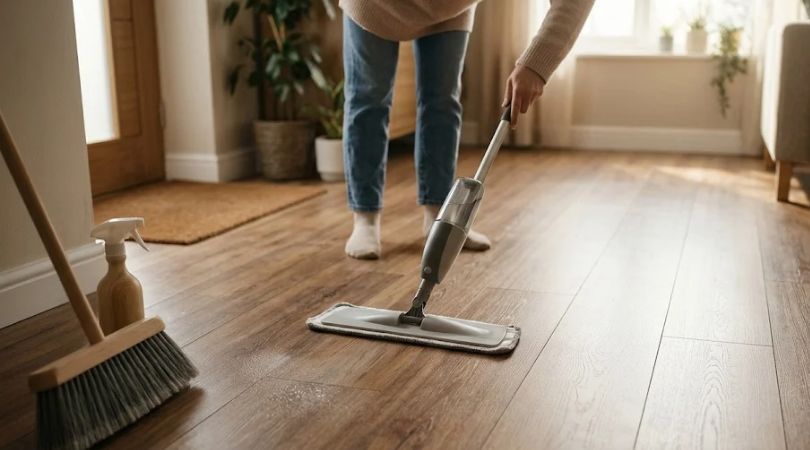

Clean luxury vinyl and SPC flooring with a dry dust mop or a soft-brush vacuum to lift grit, then damp-mop with plain water or a pH-neutral vinyl cleaner. Because these floors are waterproof, you can use more moisture than on wood, but you should still skip abrasive pads, harsh solvents, and wax polishes, which dull or damage the wear layer that protects the plank.
Waterproof Does Not Mean Worry-free
Vinyl’s great selling point, that water cannot hurt it, makes people careless with it. The core is waterproof, true, but the thing you walk on and look at is a thin printed layer protected by a clear wear layer on top, and that wear layer scratches, scuffs, and dulls like any other surface.
So the goal of cleaning vinyl is not protecting it from water, it is protecting the wear layer from grit and the wrong chemicals. A luxury vinyl floor that looks tired after three years almost always has a scratched, hazed wear layer, and that damage came from cleaning, not from spills. Treat the surface kindly and the floor keeps its finish for its full life.
The Routine That Keeps Vinyl Looking New
The everyday routine is light and quick. Dust mop or vacuum with a soft-brush head often enough to keep grit off the surface, because sand and winter salt dragged underfoot are what scratch the wear layer, and floors near a Quebec entry wear first.
Weekly, damp-mop with a well-wrung microfibre pad and either plain warm water or a cleaner made for vinyl. You have more room for moisture here than on hardwood, but a flooded floor still finds its way to the plank edges and the subfloor, so wrung-out beats soaking. For a spot that needs more, a little pH-neutral cleaner lifts kitchen grease and grime without leaving the film that dish soap and all-purpose sprays leave behind.
Safe Products And The Ones That Cause Damage
| Safe to Use | Avoid | Why It Matters |
|---|---|---|
| Soft-brush vacuum, dust mop | Beater-bar vacuum on hard setting | Can scuff the wear layer |
| Microfibre damp mop | Abrasive or steel-wool pads | Scratch the printed surface permanently |
| Plain water or pH-neutral vinyl cleaner | Wax, polish, or shine products | Build up a cloudy film that must be stripped |
| Felt pads under furniture | Bleach and ammonia cleaners | Can discolour and degrade vinyl over time |
| Doormats at every entry | Rolling-caster chairs without a mat | Grit can grind into the finish |
The product people reach for wrongly is a floor polish, because they want the shine back. Wax and polish build a cloudy film on vinyl that attracts dirt and eventually has to be stripped off, and the floor looks worse, not better. If a vinyl floor has lost its sheen, it is scratched, and no polish fixes that.
Removing Scuffs, Stains, And Residue
Most marks come off with less than you think. Rubber scuffs from shoe soles usually wipe away with a damp microfibre cloth, and a pencil eraser or a dab of baking-soda paste lifts the stubborn ones without scratching.
For sticky spills, food, drink, pet messes, wipe them up promptly and clean the spot with your pH-neutral cleaner rather than scrubbing with an abrasive. Grease responds to a vinyl cleaner, not more soap. The one mark to take seriously is from rubber, because rubber-backed mats, caster wheels, and some shoe soles can leave a stain that migrates into vinyl and will not come out, which is why we recommend felt or vinyl-safe pads under furniture instead. Our luxury vinyl buyer’s guide explains how wear-layer thickness affects how well a floor shrugs all this off.
Mistakes That Dull The Wear Layer
Three habits age a vinyl floor before its time. The first is abrasives, steel wool, rough pads, and scouring powders that scratch the clear layer you cannot repair. The second is harsh chemicals, bleach, ammonia, and strong solvents that can discolour and break down vinyl over months of use. The third is polish, which clouds the surface and attracts the very dirt it was meant to hide.
Heat and sun matter too. Direct sun through a big window can fade and even warp a vinyl floor over the years, so sheer blinds on a south-facing room protect it, and you should never use a steam mop on vinyl, because the heat can soften the plank and lift the edges. Rigid SPC handles temperature swings better than flexible LVP, which is one of the differences our SPC versus WPC guide walks through.
Also Read – SPC Vs WPC Rigid-Core VINYL: Which Waterproof Floor Wins?
Protecting The Joints And Keeping It Years
The joints between planks are the one place water can still cause trouble, by reaching the subfloor beneath a waterproof floor. So wipe standing water from a dishwasher leak or a pet bowl rather than letting it pool, and your luxury vinyl floor will outlast most expectations.
“Vinyl is the floor people think they cannot hurt, and then they come in asking why it looks scratched and cloudy,” says Sefi Dollinger, Owner of Planchers Bellefeuille, serving Quebec homeowners since 1983. “It is almost always two things, grit they never swept and a polish they used to bring the shine back. Keep a mat at the door, sweep the sand off, skip the polish, and wipe up standing water at the joints. Do that and a vinyl floor still looks new when it is ten years old. Follow the plank maker’s care guide, like the ones TORLYS publishes, and you will not go wrong.”
Frequently Asked Questions
Can I wet-mop luxury vinyl and SPC floors?
Yes, because the planks are waterproof, so vinyl tolerates more moisture than hardwood. Use a well-wrung microfibre mop with plain water or a pH-neutral vinyl cleaner. Still avoid flooding the floor, since standing water can reach the plank joints and the subfloor beneath.
What should I not use to clean vinyl plank flooring?
Avoid abrasive or steel-wool pads, which scratch the wear layer, wax and polish, which build a cloudy film, and bleach, ammonia, and strong solvents, which can discolour vinyl over time. Never use a steam mop, because the heat can soften the plank and lift the edges.
Why does my vinyl floor look dull or cloudy?
Usually one of two causes. Either the wear layer is scratched from grit and abrasive cleaning, which no product reverses, or a wax or polish has built up a cloudy film that needs to be stripped off. Keeping grit swept and skipping polish prevents both.
How do I get scuff marks off vinyl flooring?
Most shoe scuffs wipe off with a damp microfibre cloth. For stubborn marks, a pencil eraser or a dab of baking-soda paste lifts them without scratching. Avoid scouring pads and harsh solvents, which can mark the surface worse than the scuff.
Can rubber mats stain vinyl floors?
Yes. Rubber backing, caster wheels, and some shoe soles can leave a stain that migrates into vinyl and will not come out. Use felt or vinyl-safe pads under furniture and a vinyl-rated mat at entries rather than a plain rubber-backed one.
Not sure what is safe for your floor? Bring the brand name, or a spare plank, to the Saint-Jerome showroom and we will send you home with the right cleaner and a straight answer on any mark you are fighting.