
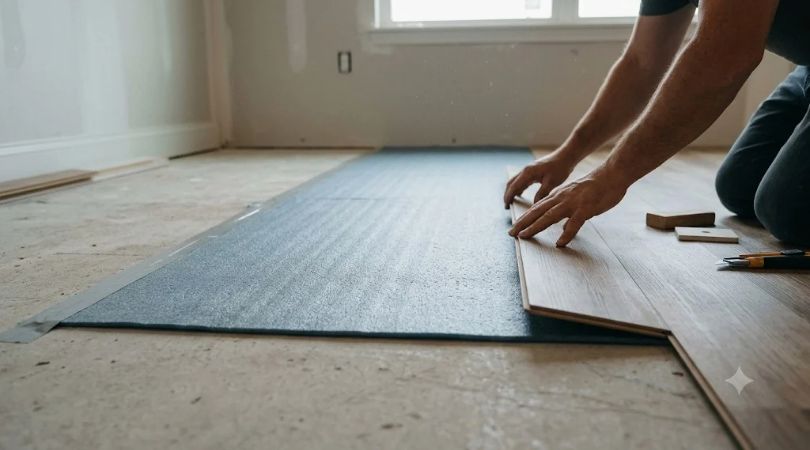
Underlayment is the thin layer that sits between your subfloor and a floating floor like laminate, luxury vinyl, or engineered hardwood. It cushions the floor, smooths small subfloor imperfections, dampens sound, and on concrete it blocks the moisture that would otherwise ruin the floor above. The right underlayment depends on your floor type and your subfloor, and the wrong one voids warranties.
The Layer Nobody Sees But Everyone Feels
Underlayment is the part of a floor no one thinks about until it is wrong. Skip it, or use the wrong type, and you get a floor that clicks underfoot, telegraphs every bump in the subfloor, sounds hollow, or, on a concrete slab, cups and swells from moisture you never saw coming.
Get it right and the floor feels solid, quiets the room, and lasts its full warranty. In a Quebec home, where many floors go over concrete basements and below-grade slabs, the moisture job alone makes underlayment non-negotiable. This is the cheap layer that protects the expensive one.
What Underlayment Actually Does?
A good underlayment does four jobs at once, and which one matters most depends on where the floor is going.
It cushions, giving a floating floor a slight give that feels better underfoot and takes the hollow click out of each step. It smooths, bridging the minor dips and high spots a subfloor always has so the floor above sits flat. It quiets, absorbing the impact sound of footsteps so the room below hears less. And over concrete, it blocks moisture vapour rising out of the slab before that moisture reaches the floor. Some products do one of these well, some combine several, and matching the product to the need is the whole decision.
The Main Types Compared
| Type | Strength | Watch Out For |
|---|---|---|
| Standard Foam | Cheap, cushions and smooths the subfloor | No moisture barrier and limited sound control |
| Combination Foam with Film | Adds a vapour barrier for concrete subfloors | Seams must be properly taped to work |
| Cork | Excellent sound control and natural material | Costs more and still needs a moisture barrier on concrete |
| Rubber | Best impact-sound reduction | Heaviest and most expensive; suited to condo-grade sound control |
| Attached Pad | Built into the plank, so no separate underlayment is needed | Convenient, but you cannot upgrade the sound rating separately |
Many luxury vinyl and SPC planks now come with an attached pad, which is convenient but locks you into whatever sound and cushion that pad provides. For a condo or an upper floor where noise matters, a separate cork or rubber underlayment almost always outperforms it.
Moisture Barriers And When You Need One
The single most important question is what your subfloor is made of. Concrete releases water vapour for its entire life, so any floating floor over a slab, basement, or below-grade room needs a moisture barrier, either a combination underlayment with a built-in film or a separate 6-mil poly sheet with taped seams. Skip it and the moisture swells laminate and can lift vinyl.
Over a wood subfloor on an upper level, you usually do not want a vapour barrier, because trapping moisture against wood causes its own problems. This is exactly where people go wrong, using a concrete-grade barrier on a plywood subfloor, or no barrier on a slab. The National Wood Flooring Association publishes the subfloor moisture-testing standards our installers follow before any floor goes down, and our flooring installation methods guide covers how this fits the larger install.
Underlayment By Floor Type
The floor you chose narrows the underlayment choices more than anything else.
Under laminate, you need a foam or combination underlayment, with a moisture barrier on concrete, and laminate never goes down without some underlayment. Under luxury vinyl and SPC, rigid planks are fussy about flatness, so a thin, dense underlayment rated for vinyl is correct, and a thick, soft foam is wrong because it lets the rigid joints flex and fail. Under engineered hardwood that is floating, a cork or combination underlayment suits it, while glued or nailed engineered floors follow a different rule entirely. Always check the floor manufacturer’s spec sheet, because using an unapproved underlayment can void the warranty.
Sound Ratings For Condos And Upper Floors
If you live in a Quebec condo, your building’s declaration almost certainly sets a minimum sound rating for new floors, and underlayment is how you hit it. Two numbers govern this: IIC, which measures impact sound like footsteps, and STC, which measures airborne sound like voices. Floating hard floors are judged mostly on impact, so IIC is the one condo boards check.
Cork and rubber underlayments carry the high IIC ratings that satisfy most condo bylaws, while a thin standard foam usually will not. Before you buy, pull your building’s flooring requirement and match the underlayment’s rated IIC to it, because replacing a floor that fails a sound inspection is an expensive lesson. A quieter floor is also simply nicer to live on.
The Advice I Give Before Anyone Buys Underlayment
“Underlayment is where people try to save fifty dollars and spend two thousand fixing it,” says Sefi Dollinger, Owner of Planchers Bellefeuille, serving Quebec homeowners since 1983. “The two rules are simple. If it is going over concrete, it needs a moisture barrier, no exceptions in a Quebec basement. And whatever the plank maker specifies, use that, because the wrong underlayment voids the warranty and the right one is cheap insurance. Bring me your floor’s spec sheet and your condo’s sound rule, and I will tell you exactly what goes under it.”
Frequently Asked Questions
Do I need underlayment under vinyl plank flooring?
Often yes, but it depends. Many luxury vinyl and SPC planks come with an attached pad and need nothing more over a wood subfloor. Over concrete you still need a moisture barrier, and if you want better sound control a thin, dense underlayment rated for vinyl helps. Never put rigid vinyl over thick, soft foam.
What underlayment do I need over a concrete basement floor?
One with a moisture barrier. Concrete releases water vapour for its whole life, so a floating floor over a slab needs either a combination underlayment with a built-in film or a separate 6-mil poly sheet with taped seams. Without it, moisture can swell laminate and lift vinyl.
Does underlayment help with noise?
Yes, and it is the main way to quiet a floating floor. Cork and rubber underlayments carry high impact-sound (IIC) ratings and are what most condo bylaws require, while thin standard foam offers little sound control. Check your building’s required rating before you choose.
Can the wrong underlayment void my floor’s warranty?
Yes. Floor manufacturers specify which underlayments are approved, and using an unapproved type, or putting rigid vinyl over soft foam, can void the warranty and cause joints to fail. Always match the underlayment to the floor’s spec sheet.
Do I need a vapour barrier on an upper floor with a plywood subfloor?
Usually not, and it can cause problems. A vapour barrier belongs over concrete, not over a wood subfloor, where trapping moisture against the plywood invites trouble. The moisture barrier rule is about concrete slabs and below-grade rooms, not upper levels.
Bring your floor’s spec sheet, and your condo’s sound requirement if you have one, to the Saint-Jerome showroom, and we will match the right underlayment to your floor and your subfloor.