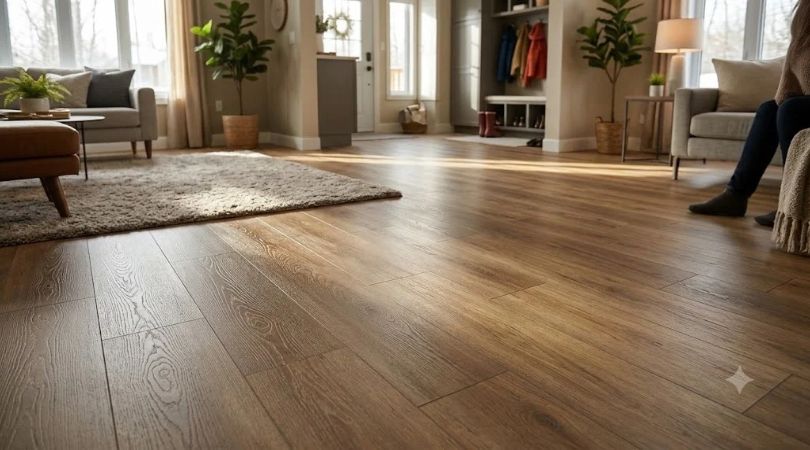

Clean hardwood floors with a dry microfibre mop or a vacuum with the beater bar off, then damp-mop with a pH-neutral hardwood cleaner and a barely wet microfibre pad. Never use a steam mop, a wet string mop, vinegar, or oil soap on a polyurethane finish. Most hardwood damage we see is cleaning damage, not wear.
Most Floor Damage Is Cleaning Damage
When a customer brings in photos of a dull, hazy, or peeling hardwood floor, the first question I ask is how they clean it. More often than not the answer explains the damage. Steam mops, vinegar, wet mopping, and the wrong cleaner do more harm to a finish in two years than a decade of footsteps.
That is good news, because it means the fix is a habit, not a renovation. A hardwood floor is protected by a thin finish, and cleaning is really about protecting that finish from grit, water, and chemicals. Get the routine right and a floor that looks tired can stay beautiful for twenty years. Get it wrong and even a brand-new floor will haze and wear early.
The Daily And Weekly Routine
Grit is the enemy. Sand, salt, and dirt tracked in on winter boots act like sandpaper under every footstep, which is why floors near the front door wear first. Daily, or as often as traffic demands, run a dry microfibre dust mop over the high-traffic paths. It takes two minutes and lifts the grit before it scratches.
Weekly, vacuum with a soft-brush head and the beater bar switched off, since a spinning beater bar scuffs a finish. Then damp-mop with a microfibre pad and a cleaner made for hardwood, wringing the pad until it is barely moist. The floor should dry within a minute behind you. If you can see standing water, the mop is too wet. In winter, put a boot tray and a mat at every entrance and the whole routine gets easier.
Products To Use And Products To Avoid
| Use These | Avoid These | Why |
|---|---|---|
| pH-neutral hardwood cleaner | Vinegar and water | Acid can dull or damage the finish over time. |
| Microfibre dust mop | Wet string mop | Standing water can swell boards and damage the finish. |
| Vacuum with beater bar off | Steam mop | Steam can force moisture into joints and cloud the finish. |
| Barely damp microfibre pad | Oil soap on polyurethane | Residue can dull the surface and attract dirt. |
| Felt pads under furniture | Wax or polish on polyurethane | Buildup can yellow the surface and complicate refinishing. |
| Mats and boot trays | All-purpose or ammonia cleaners | Harsh formulas can strip or haze the finish. |
The single most useful product on that list is the boot tray. Keep winter grit and salt off the floor and most cleaning problems never start.
Dealing With Spills And Sticky Messes
Wipe spills immediately with a dry or slightly damp cloth, then dry the spot. Water left to sit finds its way into board joints, and a glass of water forgotten overnight can leave a white mark or raise the grain. For sticky spots, juice, syrup, pet accidents, use the hardwood cleaner on a cloth rather than pouring anything on the floor, and work from the outside of the spot inward.
Dried-on messes come off with a plastic scraper or a fingernail, never a metal blade. For scuff marks from shoes, a dry microfibre cloth or a clean tennis ball rubbed over the mark usually lifts it. If a spill has already left a white water mark, the finish has clouded but the wood underneath is often fine, and our guide to repairing wood floors covers what a professional can do about it.
What Actually Ruins A Wood Finish?
Three things do most of the damage: water, steam, and acid. Water in any quantity is the first. A polyurethane finish is water-resistant, not waterproof, and water that sits in a board joint swells the wood from the edge, which is how cupping starts. That is why the mop must be barely damp and why spills get wiped now rather than later.
Steam is water with a running start. A steam mop forces hot moisture into the joints and under the finish, and over months it clouds the surface and lifts the edges of the boards. We have replaced floors that were never scratched, only steamed. Vinegar is the third. People reach for it because it is natural, but it is an acid, and repeated use dulls and etches a polyurethane finish until the floor looks permanently hazy. Our winter maintenance guide covers the seasonal version of these risks, including road salt.
Finish-specific Tips: Oil Versus Polyurethane
Most hardwood floors sold today wear a polyurethane finish, a clear plastic film cured on top of the wood. Everything above applies to it, and it needs nothing beyond cleaning for years. When it finally dulls, a professional screen-and-recoat adds a fresh top layer without sanding to bare wood.
Hardwax oil and penetrating oil finishes are different. The oil soaks into the wood rather than sitting on top, so the floor looks and feels more natural and can be spot-repaired. These floors should be cleaned with the soap the finish maker specifies, usually a mild oil-based soap that feeds the finish, and re-oiled in traffic areas every year or two. Using a polyurethane cleaner on an oiled floor dries it out, and using oil soap on polyurethane leaves residue. Know which finish you have before you buy a cleaner, and if you are not sure, bring a photo to the showroom and we will tell you.
Long-term Protection
Humidity does as much for a hardwood floor as any cleaner. Hold indoor relative humidity between 35 and 55 percent year round, which in a Quebec winter means running a humidifier, and the boards stay tight instead of gapping and checking. Add felt pads under every chair and table leg, replace them when they wear through, and lift furniture rather than dragging it.
Sunlight fades and warms wood over the years, so rotate rugs occasionally to keep the colour even. Trim your pet’s nails. And every few years, before the finish wears through to bare wood, have the floor screened and recoated. That one appointment resets the surface and is a fraction of the cost of a full sanding. The National Wood Flooring Association publishes the maintenance standards our team follows and recommends to every customer.
The Habit I Preach In The Showroom
“I can tell a steam-mopped floor from the doorway,” says Sefi Dollinger, Owner of Planchers Bellefeuille, serving Quebec homeowners since 1983. “The finish goes cloudy and the board edges lift, and the owner swears they were being gentle. Dry mop daily, damp mop weekly, nothing wet, nothing acidic, and keep the humidity up in winter. That is the whole program, and floors cleaned that way come back to me for a recoat twenty years later looking better than most five-year-old floors.”
Also Read – Oak, Maple, Hickory, or Birch? A Complete Guide to Hardwood Species for Quebec Homes
Frequently Asked Questions
What is the best way to clean hardwood floors?
Dust mop or vacuum with the beater bar off to remove grit, then damp-mop with a pH-neutral hardwood cleaner and a microfibre pad wrung nearly dry. The floor should dry within a minute. Wipe spills immediately and keep mats at every entrance to stop winter grit and salt at the door.
Can I use vinegar to clean hardwood floors?
No. Vinegar is an acid, and repeated use dulls and etches a polyurethane finish until the floor looks permanently hazy. It also does not clean well. Use a cleaner made for hardwood instead, which is pH-neutral and leaves no residue.
Is a steam mop safe for hardwood floors?
No. Steam forces hot moisture into board joints and under the finish, clouding the surface and lifting board edges over time. We have replaced floors damaged only by steam mopping. Use a barely damp microfibre mop instead.
How often should hardwood floors be cleaned?
Dust mop high-traffic paths daily or every few days to lift grit, vacuum and damp-mop weekly, and wipe spills as they happen. In winter, when boots track in salt and sand, dust mop the entry areas more often, since grit is what scratches a finish.
Can I use Murphy Oil Soap on hardwood floors?
Not on a polyurethane finish, which is what most modern hardwood floors have. Oil soaps leave a residue that dulls the surface and attracts dirt, and that film must be stripped before the floor can ever be recoated. Oil soaps belong only on floors with a penetrating oil finish, and even then use the product the finish maker specifies.
How do I get my hardwood floors to shine?
A dull floor is usually either dirty with residue or worn. Clean it with a pH-neutral hardwood cleaner to remove residue first. If it is still dull, the finish has worn, and a professional screen-and-recoat restores the sheen. Avoid shine products and polishes, which build up and must be stripped before refinishing.
What should I put under furniture on hardwood?
Felt pads under every chair, table, and sofa leg, replaced when they wear through or fill with grit. Use wide pads on heavy pieces and lift furniture rather than dragging it. Avoid rubber or plastic glides, which can mark the finish, and use a rug pad made for hardwood under area rugs.
Does humidity matter for cleaning hardwood?
Yes. Dry winter air shrinks boards and opens gaps where dirt and water collect, and humid summer air swells them. Keep indoor relative humidity between 35 and 55 percent year round, with a humidifier in winter, and the floor stays tight, cleans more easily, and lasts longer.
Not sure which finish is on your floor? Bring a photo or a spare board to Saint-Jerome and we will send you home with the right cleaner.
450, boul. Roland-Godard, Saint-Jerome, QC | (450) 431-8789 | planchersbellefeuille.com