Most hardwood floor damage is repairable, and the right fix depends on how deep it goes. Light surface scratches often buff or blend out yourself. Deeper gouges and dents need filling or a spot repair. Water damage demands fast action and sometimes board replacement. Knowing which level of damage you have tells you whether to grab a repair pen or call a professional, and prevention beats every repair.
Damage Happens, And Most Of It Is Fixable
Even a well-cared-for hardwood floor picks up marks. Furniture drags, a dropped pan, a dog’s nails, a pot that boiled over. It is not a sign you chose the wrong floor, it is the normal life of real wood in a lived-in Quebec home, and one of hardwood’s great advantages is that it can be repaired rather than simply replaced. The key is matching the repair to the damage. Reaching for a full sand-and-refinish over a single scratch is overkill, and filling a deep gouge with the wrong product looks worse than the damage. So the first job is always to assess how deep the problem goes. Is it in the finish only, into the wood, or has moisture gotten underneath? Once you know that, the right fix is usually straightforward, and often something you can handle yourself.
Minor Surface Scratches: The Easy Wins
Most of what bothers people are light scratches that sit in the finish, not the wood, and these are the simplest to handle. If you run a fingernail across the mark and it does not catch in a groove, you are likely dealing with a surface scratch. For a fine scratch, cleaning the area and applying a matching touch-up product, a finish pen, a blending stick, or a dab of matching finish, often makes it disappear. A cluster of fine scratches in a high-traffic path can sometimes be improved with a maintenance coat, a fresh layer of compatible finish over the existing one, without full sanding. Match the sheen as well as the colour, because a glossy touch-up on a matte floor stands out. These small fixes are genuinely DIY-friendly, and they handle the majority of everyday marks.
Deeper Gouges And Dents
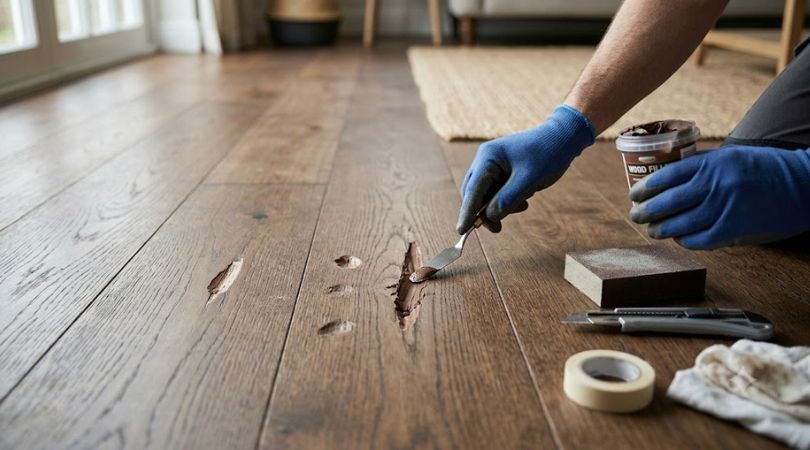
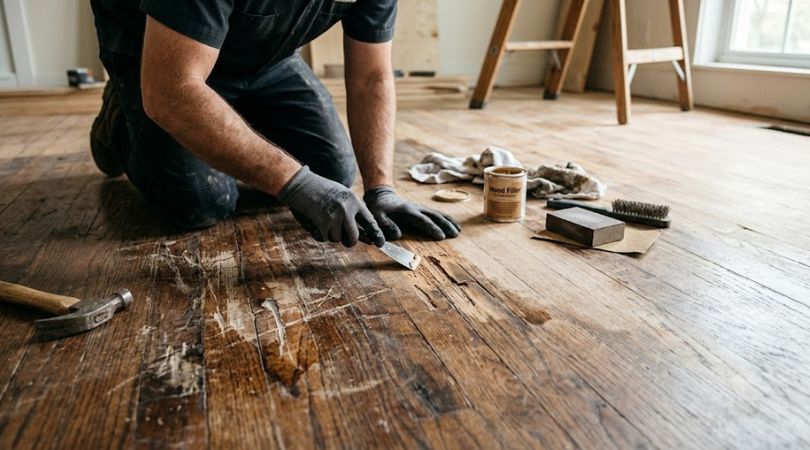
When the damage goes into the wood, a dropped knife, a dragged appliance, a heavy dent from a furniture leg, the fix is a step up but still often manageable. Now you are repairing wood, not just finish. A dent, where the wood is compressed but not broken, can sometimes be raised with a little moisture and heat, since wood fibres swell back. A gouge that removed wood needs filling with a colour-matched wood filler or a hard wax stick, then sealed with matching finish. The goal is to fill the void level, blend the colour, and match the sheen so the repair reads as part of the floor. Deep or splintered damage is where many homeowners hand it to a professional, because getting the colour and level right takes practice. Done well, a spot repair on a single board is invisible from standing height.
Water Spills And Acting Fast
Water is hardwood’s real enemy, and with a spill, speed matters more than technique. The faster you act, the less damage there is to repair, so this is the one situation where you should drop everything. Wipe up standing water immediately and dry the area thoroughly, because water sitting on wood soaks in through the finish and the board edges within minutes to hours. A quick wipe of a glass of spilled water usually leaves no damage at all. Water left overnight, from a dishwasher leak, a pet accident, or an overflowing sink, is what causes staining, cupping, and lifting. If a floor got genuinely wet, dry it, then watch it over the following days for signs of movement. Fast cleanup is the single best water-damage repair there is, because it prevents the damage entirely.
Cupping And Warping From Moisture
When water gets under boards or the air stays too humid, hardwood cups, the board edges rise higher than the centre, or in bad cases it crowns or buckles. This is moisture damage, and it needs a different approach than a scratch, because you have to fix the cause before the symptom. Mild cupping from a humid spell can partly correct itself once the moisture source is removed and the home returns to a healthy 35 to 55 percent humidity, so the wood dries evenly. Do not sand a cupped floor while it is still wet, because it will over-flatten and then dish the other way when it dries. Persistent cupping, or cupping from a leak below, usually means finding and fixing the moisture source, drying the floor fully, and then assessing whether boards need replacing.
Choosing The Level Of Repair
Every hardwood repair falls into one of three levels, and picking the right one saves money and gets the best result. A fine surface scratch takes a touch-up pen or blending stick (DIY). A cluster of light scratches in a path takes a maintenance coat over existing finish (DIY or pro). A dent where wood is compressed takes steam and heat to raise the fibres (DIY). A gouge where wood is removed takes colour-matched filler then finish (DIY or pro). A single damaged or stained board takes board replacement and blend (pro). Widespread wear or many deep marks takes a full sand and refinish (pro). Cupping or water damage means fixing the moisture source, drying, then assessing (pro). Spot repair handles isolated damage. Board replacement swaps out one or a few ruined boards. Full refinishing renews an entire tired floor. Match the level to the damage rather than defaulting to the biggest, most expensive fix.
Also Read – Hardwood vs. Engineered Flooring – Which Is Better for Quebec Homes?
When To Call A Professional?
Plenty of hardwood repairs are DIY-friendly, but some situations reward a professional, and knowing the line saves you a worse result. Call a pro when the fix affects appearance in a visible area and you are not confident you can match colour and sheen invisibly. Board replacement is the clearest case, because removing and reweaving a board into an existing floor without damaging neighbours takes the right tools and technique. Water damage with cupping, staining, or a leak below is another, because the cause has to be diagnosed and fixed, not just the surface. And a full refinish is a professional job, both for the equipment and for the dust control. A good repair should be invisible from standing height, and if you cannot get there yourself, a pro can. The National Wood Flooring Association sets the repair and refinishing standards a professional follows.
What Sefi Tells Homeowners About Damage?
“People panic over a scratch and want to sand the whole floor, and I have to talk them down, because nine times out of ten it is a finish pen and five minutes,” says Sefi Dollinger, Owner of Planchers Bellefeuille, serving Quebec homeowners since 1983. “The one thing I do get worked up about is water. Wipe a spill the second it happens and you will never see it. Leave it overnight and now we are talking about cupped boards. So keep felt pads under the furniture, mats at the doors, and a towel handy, and hold your humidity steady. Prevention is the repair that costs nothing.”
Preventing Damage In The First Place
The best repair is the one you never need, and hardwood damage is largely preventable with a few habits. Put felt pads under all furniture legs and refresh them as they wear, because a bare chair leg is the most common scratch source in a home. Place mats at every entry to catch the grit and winter salt that would otherwise grind into the finish, and take up wet boots. Trim pet nails and wipe up accidents fast. Keep heavy rolling loads off bare wood. And hold indoor humidity at 35 to 55 percent year round to prevent the gaps and cupping that dry winters and humid summers cause.
Frequently Asked Questions
How do I fix scratches in a hardwood floor?
For a fine scratch that sits in the finish, clean the area and apply a matching touch-up product, a finish pen, a blending stick, or a dab of matching finish, taking care to match both the colour and the sheen. A cluster of light scratches in a traffic path can sometimes be improved with a maintenance coat over the existing finish, without full sanding. Deeper scratches into the wood need filler.
Can you fix dents in a hardwood floor?
Often, yes. A dent where the wood is compressed but not broken can sometimes be raised by applying a little moisture and heat, which swells the wood fibres back toward level. A gouge that actually removed wood needs colour-matched filler or a hard wax stick, then sealed with matching finish. Deep or splintered damage is best handled by a professional for an invisible result.
What should I do if water spills on my hardwood floor?
Wipe it up immediately and dry the area thoroughly. Water soaks into wood through the finish and board edges within minutes to hours, so a fast wipe of a normal spill usually leaves no damage at all. Water left overnight causes staining, cupping, and lifting. If a floor got genuinely wet, dry it and watch it over the following days for signs of movement.
Can water-damaged hardwood be repaired?
Sometimes. Mild cupping from a humid spell can partly correct once the moisture source is removed and the home returns to 35 to 55 percent humidity so the wood dries evenly. Do not sand a cupped floor while it is still wet. Severe water damage, staining, or cupping from a leak usually means fixing the moisture source, drying fully, and replacing affected boards, which is a professional job.
When should I refinish instead of spot-repairing my floor?
Spot-repair isolated scratches, dents, and single damaged boards. Choose a full sand and refinish when wear and damage are widespread, the finish is worn through across traffic areas, or many deep marks make spot repairs stand out. If the floor is generally tired rather than locally damaged, refinishing renews the whole surface and is more cost-effective than dozens of individual fixes.
How do I prevent scratches on my hardwood floor?
Put felt pads under all furniture legs and refresh them as they wear, since a bare leg is the most common scratch source. Place mats at every entry to catch grit and winter salt, and remove wet boots. Trim pet nails, wipe up accidents fast, and keep heavy rolling loads off bare wood. Consistent felt pads and door mats prevent most everyday scratches.
What causes hardwood floors to cup?
Cupping happens when the underside of the boards holds more moisture than the top, so the edges rise higher than the centre. It comes from water getting under the floor, a leak below, or indoor humidity staying too high. Fix the moisture source, return the home to 35 to 55 percent humidity so the wood dries evenly, and then assess whether any boards need replacing.
Is board replacement better than refinishing for one damaged plank?
Yes, for a single ruined or stained board, replacement is usually the better fix, because it swaps out the damaged plank and blends a new one in without sanding the whole floor. It takes a professional’s tools and technique to remove and reweave a board without harming its neighbours. Refinishing is for widespread wear, not one isolated damaged board.
Got a scratch, dent, or water mark you are not sure about? Send us a photo or bring it by the Saint-Jerome showroom, and we will tell you honestly whether it is a five-minute fix or a job for us.
450, boul. Roland-Godard, Saint-Jerome, QC | (450) 431-8789 | planchersbellefeuille.com