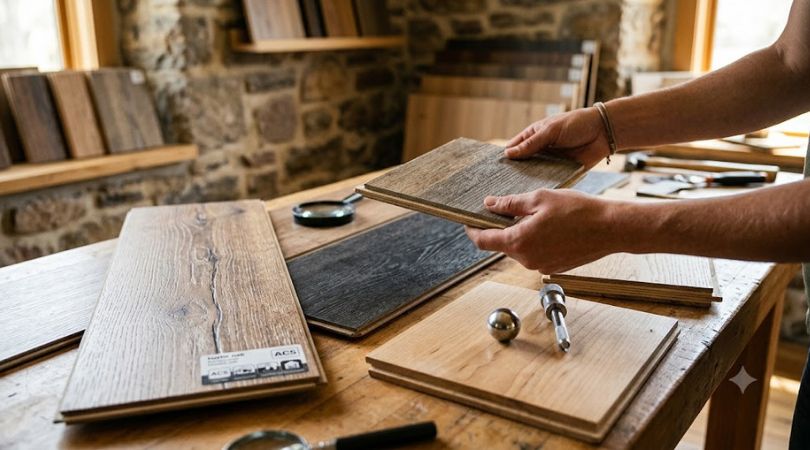

To prepare for flooring installation, clear the rooms of furniture and belongings, empty and disconnect any appliances that sit on the floor, let the new flooring acclimate in the home first, and plan for pets, kids, and clear access for the crew. Good preparation is what keeps the job on schedule and protects your home, and most of it is simple if you know what to do before the crew arrives.
A Little Prep Prevents Most Installation-day Problems
The difference between a smooth installation and a stressful one is usually decided before the crew shows up. A home that is ready lets the team start on time and finish on schedule. A home that is not ready burns the first hours moving your things, and small delays add up across the job. Preparation also protects what you own. Flooring work generates dust and involves moving heavy materials through your home, and a few steps ahead of time keep your belongings and your other rooms safe. None of it is complicated. It is furniture, appliances, acclimation, and access, handled in advance so installation day is about installing the floor, not scrambling. Walk through this before your date and the whole project goes better.
Clear The Rooms Of Furniture And Belongings
The first and biggest job is emptying the space, and the more you do here, the faster and cleaner the installation goes. The crew needs open, unobstructed rooms to work in. Remove all furniture from the rooms being floored, along with rugs, lamps, plants, and anything on shelves or walls that could be knocked during the work. Small and fragile items should go somewhere safe, out of the work zone entirely. If you cannot move large or heavy pieces yourself, tell your installer in advance, because many teams will move heavy furniture as part of the job or arrange it, but they need to know beforehand to plan the time. An empty room is a floor that goes in quickly and without risk to your things.
Appliances, Baseboards, And Doors
A few fixed items around the room need attention, and handling them early prevents mid-job surprises. Appliances that sit on the floor, a fridge, a stove, a washer, are the main ones to plan for. Empty and, where needed, disconnect appliances that sit in a room being floored, and coordinate with your installer on who moves them and whether water or gas lines need a professional to disconnect. Baseboards are often removed and reinstalled to give a clean edge, so expect that as part of the work. Doors sometimes need to be trimmed slightly to clear a new floor that sits higher than the old one. Your installer handles the baseboards and door adjustments, but knowing they are part of the process means nothing catches you off guard.
Let The Flooring Acclimate First
This step happens before installation day, not on it, and it is one of the most important, especially with wood in our climate. The new flooring needs to sit inside your home and adjust to your indoor conditions before it goes down. Wood and many other floors trade moisture with the air and change size as they do, so a floor installed straight off the delivery truck can move afterward and gap or cup. The material should be delivered ahead of the install date and left in the actual rooms, at normal living temperature and with indoor humidity in the healthy 35 to 55 percent range, so it settles first. Your installer will tell you how many days the specific product needs. Do not schedule the install for the same day the flooring arrives.
Must Read – Acclimating Hardwood Before Installation: Why It Matters In Quebec
Managing Pets, Kids, And Access

Installation day is busy, and a flooring crew works best with clear space and open routes. Planning for the people and animals in your home keeps everyone safe and the work moving. Pets should be kept well away from the work area for the whole day, in a closed room, with a sitter, or offsite, because the tools, open doors, and materials are hazards for them and a distraction for the crew. Young children are the same. The team will also need clear access from the entry to the rooms being floored to carry in long boards and equipment, so clear that path and plan parking if the crew is unloading materials. A little planning here prevents the small chaos that slows a job down.
Protecting The REST Of Your Home
Flooring work makes dust, especially any sanding, cutting, or removal of an old floor, and a few steps keep it from spreading through the house. Your installer will take precautions, and you can help. Close doors to rooms that are not part of the project, and consider hanging plastic sheeting or a dust barrier across open doorways to connected spaces. Cover or remove electronics and soft furnishings in adjacent rooms that dust could reach. Remove wall art and mirrors near the work zone, since installation involves vibration and moving materials. These simple barriers contain the mess to the work area, so cleanup is faster and the rest of your home stays livable while the floor goes in.
What Your Installation Team Handles?
You are not doing all of this alone, and knowing what the crew takes care of tells you what is left for you. A professional team handles the technical and heavy parts of the job. The installation team handles removing the old floor, baseboard removal and reinstall, trimming doors to fit the new floor, subfloor inspection and preparation, and moving heavy furniture if arranged in advance. You handle, before the day, clearing small items and valuables and emptying appliances, and on the day, securing pets and clearing access. Your job is the prep only you can do. The team handles the floor. When both sides do their part, the day runs on time.
Check Out – How Much Does New Flooring Cost In Quebec? A Real Budget Guide
What Sefi Asks Of Every Homeowner?
“The jobs that run late are almost never the floor’s fault, they are a room full of furniture the crew has to move before they can even start,” says Sefi Dollinger, Owner of Planchers Bellefeuille, serving Quebec homeowners since 1983. “I ask every homeowner for three things: clear the room, let the wood acclimate in the house first, and keep the dog somewhere safe for the day. Do those and we are laying floor by nine in the morning instead of moving your couch at ten. The prep you do the night before is what gets you a finished floor on schedule.”
A Simple Pre-installation Checklist
Here is the short version to run through before your installation date. A week ahead, confirm your flooring is delivered and acclimating in the actual rooms, and confirm with your installer who is moving heavy furniture and appliances. The day before, clear all furniture, rugs, and belongings from the rooms, remove wall art and fragile items from the work zone and adjacent spaces, and empty appliances that sit on the floor. On the day, secure pets and children away from the work area, clear a path from the entry to the rooms, plan parking for the crew, and close doors or hang dust barriers to protect the rest of the home. Follow that and you have done your part for a smooth, on-time installation. The National Wood Flooring Association publishes the acclimation and preparation standards a good installer follows.
Frequently Asked Questions
How do I prepare my home for flooring installation?
Clear all furniture, rugs, and belongings from the rooms, remove wall art and fragile items, empty appliances that sit on the floor, and let the new flooring acclimate in the home for the days your installer specifies. On the day, secure pets, clear a path for the crew, and close doors or hang dust barriers to protect other rooms. Preparation keeps the job on schedule.
Do I need to move my own furniture before flooring installation?
You should clear small items, rugs, and belongings yourself, and arrange heavy furniture in advance. Many installers will move large, heavy pieces as part of the job or coordinate it, but they need to know beforehand to plan the time. Confirm with your installer who is moving what, and empty any furniture that will be relocated during the work.
How long does flooring need to acclimate before installation?
It depends on the product, so follow the manufacturer’s guidance and your installer’s advice, and confirm with a moisture check rather than a set number of days. The flooring should be delivered ahead of time and left in the actual rooms at normal living temperature and 35 to 55 percent humidity so it settles first. Never install flooring the same day it arrives.
Should I keep pets away during flooring installation?
Yes. Keep pets well away from the work area for the entire day, in a closed room, with a sitter, or offsite. The tools, open doors, adhesives, and materials are hazards for animals and a distraction for the crew, and an anxious pet underfoot slows the job and risks getting hurt. Plan for young children the same way.
Who removes the old flooring and baseboards?
Your installation team handles removing the old floor, taking off and reinstalling baseboards, trimming doors to fit the new floor, and preparing the subfloor. These are part of a professional installation. Your job is the preparation only you can do, clearing belongings, emptying appliances, and managing pets and access, so the crew can focus on the floor.
How do I protect the rest of my home from dust?
Close doors to rooms not being worked on, and hang plastic sheeting or a dust barrier across open doorways to connected spaces. Cover or remove electronics and soft furnishings dust could reach, and take down wall art and mirrors near the work zone. Your installer takes precautions too, and these simple barriers keep the mess contained to the work area.
Do doors need to be adjusted for new flooring?
Sometimes. If the new floor sits higher than the old one, interior doors may need to be trimmed slightly at the bottom to clear it and swing freely. Your installer handles this as part of the work. It is worth knowing in advance so the small change to your doors does not come as a surprise after the floor goes in.
What should I confirm with my installer before the day?
Confirm the flooring is delivered and acclimating in the actual rooms, who is moving heavy furniture and appliances, whether any water or gas lines need a professional to disconnect, the expected timeline, and access and parking for the crew. Clearing up these details a week ahead prevents installation-day surprises and keeps the project on schedule.
Booked an installation with us? Ask for our prep checklist ahead of the day, and we will make sure your home and your floor are ready.
450, boul. Roland-Godard, Saint-Jerome, QC | (450) 431-8789 | planchersbellefeuille.com