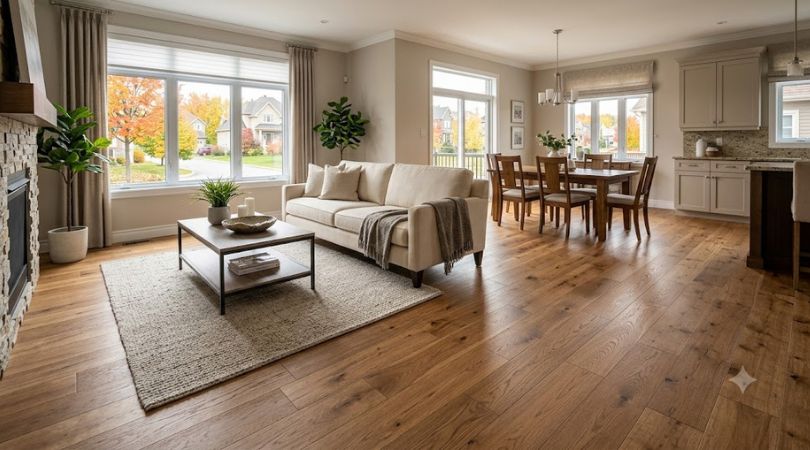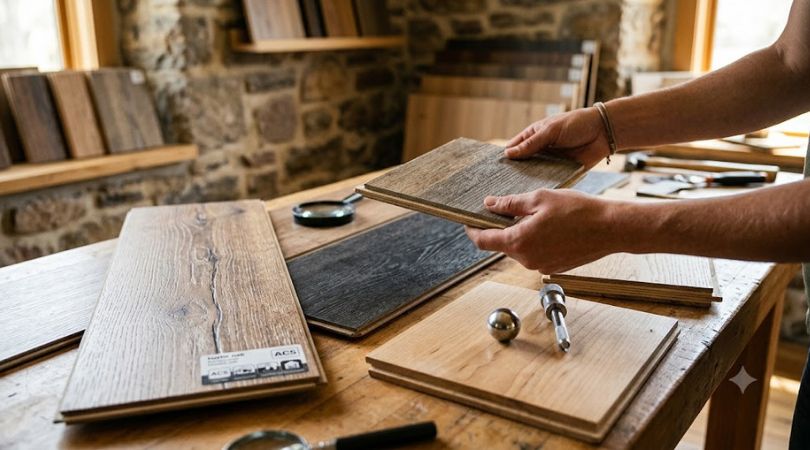

Acclimating hardwood means letting the wood sit in the room where it will be installed until its moisture content matches the home’s normal indoor conditions. Skip this step and the boards keep moving after install, which causes gaps, cupping, or buckling. In Quebec, where indoor humidity swings hard between seasons, acclimation is not optional. It is the difference between a floor that stays flat and one that fails.
What Acclimation Actually Does?
Wood is hygroscopic, which is a technical way of saying it constantly trades moisture with the air around it and changes size as it does. A hardwood floor delivered from a warehouse arrives at whatever moisture level that warehouse held, which is rarely the same as your living room. Acclimation lets the wood reach equilibrium with the room it will live in, so it does most of its expanding or shrinking before it is nailed or glued down, not after. Install a floor that is still too wet and it will shrink and gap as it dries to your home. Install one that is too dry and it will swell and buckle as it takes on moisture. Either way, a floor that was not acclimated keeps moving under your feet, and that movement is what tears joints, cups boards, and lifts planks. Acclimation front-loads the movement so the finished floor stays put.
Why Quebec Makes This Step Non-negotiable?
Acclimation matters everywhere, but our climate raises the stakes. The gap between indoor summer and winter humidity here is wider than in most of North America, so wood that starts at the wrong moisture level has further to travel and more damage to do. A floor delivered in a humid August and installed the same day will shrink hard when the furnace dries the house in December. A floor stored in a cold, dry garage and rushed inside will swell when it warms to room conditions. In both cases the movement shows within a season. That is why I never let a hardwood job go in the day it arrives, and why the wood has to sit inside the actual rooms, at normal living temperature and humidity, before a single board goes down. Our climate punishes shortcuts here more than almost anywhere.
How To Acclimate, Step By Step?
Acclimation is simple, but it has rules. Deliver early: bring the wood into the actual install rooms, not the garage, because the wood must match the living space, not storage. Set the climate: home at normal living temperature, humidity 35 to 55 percent, so the wood settles to real conditions, not a jobsite extreme. Open and stack: open the boxes and cross-stack the boards so air flows around them, for even moisture exchange on all sides. Wait: solid wood often needs several days or more, so follow the maker, because rushing leaves moisture uneven inside the boards. Test, do not guess: check with a moisture meter before installing, because time alone does not confirm the wood is ready. Follow the manufacturer’s specific acclimation instructions, since engineered and solid products differ, and the maker’s warranty depends on it.
The Step That Separates Pros From Guessers
Here is what most homeowners and even some installers skip: testing. Waiting a fixed number of days is a guess, because the right acclimation time depends on the wood, the room, and the starting moisture, not the calendar. A moisture meter reads the actual moisture content of the wood and, ideally, the subfloor beneath it. The floor is ready when the wood’s moisture content is close to what it will be in service and within the manufacturer’s allowed range of the subfloor’s moisture, usually within two to four percentage points. I take readings across the room and across several boards, because one dry board near a vent does not mean the pallet is ready. If the numbers are not right, the wood waits. This single measurement, not a countdown, is how you know the floor will stay flat. The National Wood Flooring Association builds its installation standards around exactly this test.
What Skipping Acclimation Looks Like Later?
The damage from a rushed install does not show on day one, which is what makes it so common and so costly. It appears a season later, when the wood finishes the movement it should have done before install. Install too wet, and the wood shrinks as it dries to your home, opening gaps between boards and sometimes checking the surface. Install too dry, and the wood swells as it absorbs moisture, cupping board edges upward or buckling planks off the subfloor entirely. These are not warranty defects in the wood, they are installation failures, and they often mean pulling up and replacing the floor. I have been called to diagnose “bad flooring” more than once, only to find perfectly good wood that was never given time to settle.
Check Out – Hardwood Floors vs. Laminate Floors: Making the Right Choice for Your Quebec Home
Why We Build The Wait Into Every Job?
“The most expensive mistake I see is a floor installed the day the truck dropped it off, because someone was in a hurry,” says Sefi Dollinger, Owner of Planchers Bellefeuille. “That wood had no chance to settle, and by the next winter it gapped or cupped, and now the whole floor comes up. On our jobs, the wood sits in the room, the house is at normal humidity, and I put a meter on it before we start. It adds a few days. It also means I am not coming back to argue about a floor that was never given a chance. Patience here is the cheapest insurance in flooring.”
Frequently Asked Questions
How long does hardwood need to acclimate?
It depends on the product, the room, and the starting moisture, so follow the manufacturer’s instructions and confirm with a moisture meter rather than a fixed number of days. Solid hardwood often needs several days or more in the install room at normal living conditions. The wood is ready when its moisture content, not the calendar, says so.
Do I really need to acclimate engineered hardwood?
Yes, though engineered wood is more stable and usually needs less time than solid. Its cross-plied core moves less, but it still must reach equilibrium with the room, and the manufacturer’s warranty depends on proper acclimation. Always follow the specific product instructions, since some engineered floors require a short acclimation and others allow installation sooner.
What happens if you do not acclimate hardwood?
The wood keeps moving after installation. If it was too wet, it shrinks and opens gaps as it dries to your home. If it was too dry, it swells and cups or buckles as it absorbs moisture. These failures usually appear within a season and often require pulling up and replacing the floor, since they are installation problems, not wood defects.
Where should hardwood acclimate before installation?
Inside the actual rooms where it will be installed, at normal living temperature and with indoor humidity at 35 to 55 percent, with the boxes opened and boards cross-stacked so air flows around them. A garage, basement, or unheated space does not represent the living conditions the floor will face, so acclimating there defeats the purpose.
How do I know when hardwood is ready to install?
Test it with a moisture meter rather than watching the calendar. The wood is ready when its moisture content is close to what it will be in service and within the manufacturer’s allowed range of the subfloor moisture, usually within two to four percentage points. Take readings across several boards and areas, not just one spot.
Does engineered hardwood cup if not acclimated?
It can. Engineered wood is more stable than solid, but if it is installed far from equilibrium, especially too dry, it can still cup, gap, or stress at the seams as it adjusts. Proper acclimation and a moisture check before installation prevent this. The cross-plied core reduces movement but does not eliminate the need to acclimate.
Can you install hardwood the same day it is delivered?
No, not properly. Wood delivered from a warehouse rarely matches your home’s moisture, so installing it immediately means it will move afterward and likely gap, cup, or buckle within a season. Bring the wood into the install rooms, let it acclimate to normal living conditions, and confirm with a moisture meter before laying it.
Does the subfloor moisture matter for acclimation?
Yes. The wood and the subfloor must be within the manufacturer’s allowed moisture difference, usually two to four percentage points, or the floor will move even if the wood alone seems ready. This matters especially over a Quebec concrete slab, which can hold moisture. Test both the wood and the subfloor before installing.
Plan your install with acclimation built in. Talk to our Saint-Jerome team and we will schedule the job so your floor settles before a single board goes down.