Herringbone and chevron are the two classic patterned floors, and the difference is in the cut. Herringbone uses rectangular planks laid in a broken zigzag, with the end of one board meeting the side of the next. Chevron uses planks cut at an angle so they meet point to point in a continuous V. Herringbone reads timeless and forgiving, chevron reads sharp and formal, and both cost more to install than straight boards because of the labour.
Two patterns people constantly mix up
Ask ten homeowners the difference between herringbone and chevron and most will describe the same floor. They are cousins, both laid on the diagonal, both built from wood planks, both dramatic. But they are not the same, and once you see the distinction you cannot unsee it.
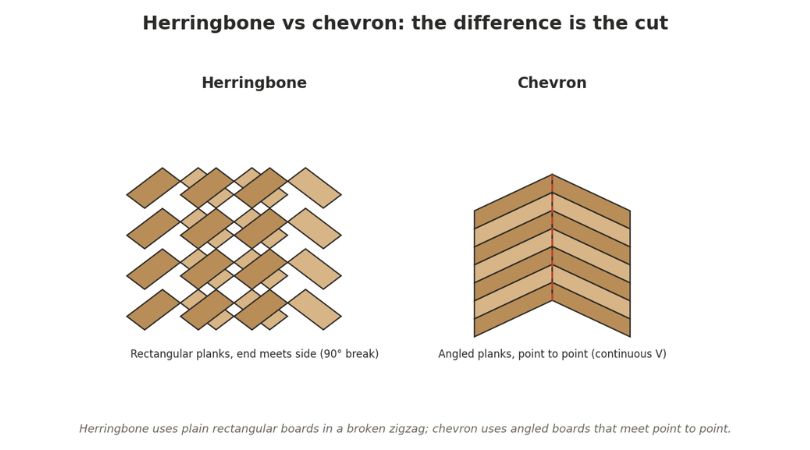
The whole difference is in how the board ends are cut. Herringbone uses plain rectangular planks. Chevron uses planks with angled ends. That one detail changes the milling, the labour, the cost, and the feeling of the finished floor. Get it clear before you shop, because a supplier quoting “herringbone” and a supplier quoting “chevron” are quoting two different products.
Herringbone: the broken zigzag
Herringbone is made from standard rectangular boards, laid so the short end of one plank butts against the side of the next at a 90 degree angle. Repeat that across the floor and you get the familiar broken zigzag, a staggered weave that has been in European homes and grand buildings for centuries.
Because the boards are plain rectangles, herringbone is more forgiving to produce and, in a sense, to live with. The pattern’s busyness hides minor imperfections, and its long history means it never looks like a trend that will date. It reads classic in a heritage home and equally at home in a modern one. When a client wants pattern without risk, herringbone is where I point them.
Chevron: the continuous V
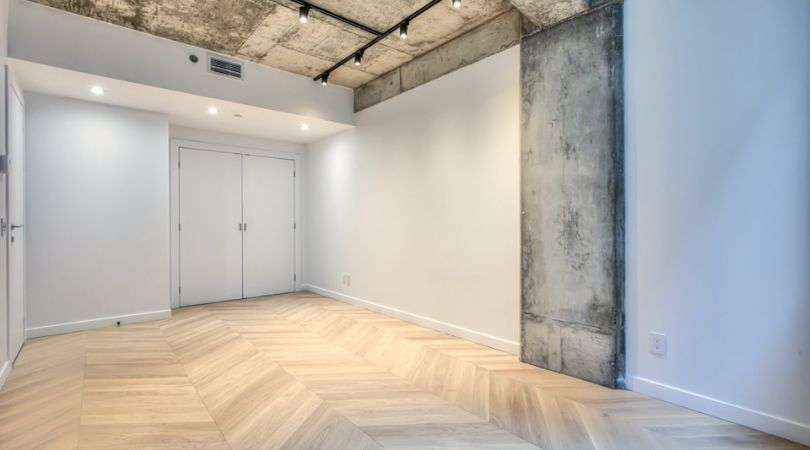
Chevron is made from boards cut at an angle on the ends, usually 45 degrees, so that when two planks meet they form a clean, unbroken V that runs in a continuous zigzag down the floor. There is no break in the line the way there is in herringbone. The points align perfectly, creating crisp arrows marching across the room.
That precision is chevron’s signature and its demand. The angled cuts mean more milling, more waste, and far less tolerance for error during installation, because a misaligned point shows immediately. The payoff is a sharper, more formal, more contemporary look. Chevron is the pattern for a client who wants the floor itself to be the statement.
The side-by-side that settles it
| Feature | Straight Lay Pattern | Herringbone Pattern |
|---|---|---|
| Board Cut | Rectangular, plain ends | Angled ends, usually 45° |
| How Boards Meet | End to side, 90° brea | Point to point, continuous V |
| Overall Feel | Timeless, forgiving, classic | Sharp, formal, contemporary |
| Milling & Material Waste | Lower | Higher, angled cuts |
| Installation Difficulty | High | Highest, points must align |
| Relative Cost | High. | Highest |
| Hides Imperfections | Yes, busy pattern | Less, precise lines show flaws |
| Best Suited To | Any home, heritage or modern | Statement rooms, formal spaces |
What it costs, and why
Both patterns cost more than a straight-laid floor, and it is worth understanding where the money goes. There are three added costs: the material, because patterned planks are often milled shorter and to tighter tolerances; the waste, because angled and fitted cuts generate more offcuts than straight runs; and the labour, because laying a pattern takes far longer and demands a more skilled installer than snapping boards in straight rows.
As a rough guide, expect a herringbone or chevron installation to run meaningfully above a straight-lay floor in the same material, with chevron the more expensive of the two because of the angled milling and the zero-tolerance alignment. Treat that as directional for the Saint-Jerome and greater Montreal area, not a quote, since layout, material, and room complexity all move the number. The pattern is an investment in the look, not a way to save money.
Which materials work in a pattern
Not every floor comes in a pattern, and the material choice interacts with our climate. Here are the realistic options.
- Engineered hardwood is my most common recommendation for patterned floors in Quebec. It comes in herringbone and chevron formats, and its cross-plied core stays stable through our humidity swings, which matters because a pattern magnifies any seasonal movement.
- Solid hardwood can be laid in herringbone and looks superb, but it moves more with humidity, so it demands strict climate control and an experienced installer.
- Luxury vinyl and laminate now come in convincing herringbone and chevron formats at a fraction of the cost, a strong option for a waterproof or budget-conscious patterned floor. Our luxury vinyl page shows the formats we carry.
- Porcelain tile offers wood-look herringbone that is fully waterproof, ideal for an entry or bathroom where you want the pattern without the moisture worry.
For most patterned projects in our climate, engineered hardwood is the sweet spot of authenticity and stability. Our engineered hardwood page covers the constructions we stock.
Why the pattern raises the stakes in a Quebec climate
A patterned floor is less forgiving of seasonal movement than a straight-laid one, and that is the Quebec-specific caution. When boards run straight, small expansion and contraction spread evenly along parallel joints. In a pattern, every board meets its neighbours at an angle, so any movement shows up as gaps at the points and joints where the eye is already drawn.
This is why I push engineered construction for patterns here, and why humidity control is not optional. Hold the home between 35 and 55 percent relative humidity year round, use a humidifier in the dry winter and manage summer moisture, and keep a hygrometer in the main living space. A pattern rewards that discipline with a floor that stays crisp, and punishes neglect faster than a plain floor would. Our cold climate flooring guide explains the humidity mechanics.
Design: where each pattern belongs
Pattern is a design decision as much as a flooring one. A few principles from walking clients through it.
Herringbone suits almost any room and any size. In a small space it adds interest without overwhelming, and in a large open floor it brings warmth and movement to what could feel like a runway. It pairs with both traditional and modern interiors, which is why it is the safer choice when you are not sure.
Chevron wants a role. Its crisp directional lines lead the eye, so it shines in a room with a clear axis, an entry, a hallway, a formal dining room, or as a deliberate feature. In a large, busy, multi-use space the strong direction can fight the furniture. Use chevron where you want the floor to make a statement, not everywhere at once.
Both patterns interact with plank width and colour. Narrower planks read more traditional and intricate; wider planks read more modern. A single tone keeps the pattern clean, while high board-to-board contrast makes it busier. We have installed patterned floors across the region, including the chevron project featured on our chevron flooring project page, and the same rules held every time.
Installation is not a DIY job
This is the one flooring pattern I would never suggest a homeowner attempt themselves. A straight floor forgives a small error; a pattern compounds it. Every board in herringbone has to hold a precise angle, and every point in chevron has to align exactly, or the whole field drifts and the flaw runs the length of the room.
It also starts with layout, not laying. A patterned floor has to be centred and squared to the room before the first board goes down, because the pattern’s symmetry is the entire point. An experienced installer spends real time setting the working lines before anything is fastened. This is skilled trade work, and it is where the labour cost earns itself. Our installation services page covers how we approach patterned layouts.
The verdict from the showroom
“Clients come in saying they want herringbone when they mean chevron, or the other way around, and my first job is just to show them the two side by side,” says Sefi Dollinger, Owner of Planchers Bellefeuille, serving Quebec homeowners since 1983. “Once they see it, they know. Herringbone is the one you can put anywhere and never regret. Chevron is the showstopper for the room you want people to notice. Both cost more and both are worth it if pattern is what you want, as long as you put them down in engineered wood and keep the humidity honest through our winters.”
Frequently asked questions
What is the difference between herringbone and chevron flooring?
Herringbone uses rectangular planks laid so the end of one meets the side of the next in a broken zigzag. Chevron uses angled-end planks that meet point to point in a continuous V. Herringbone reads classic, chevron reads sharp and formal.
Is chevron or herringbone more expensive?
Chevron, generally. Its angled end cuts require more milling and more waste, and its points must align exactly, which demands more installation time. Both cost more than a straight-laid floor, and chevron sits at the top.
Is herringbone flooring out of style?
No. Herringbone has been used for centuries and is considered timeless rather than trendy. It suits heritage and modern interiors alike, which is why it is the lower-risk choice when you want a patterned floor that will not date.
Can herringbone and chevron be done in vinyl or laminate?
Yes. Luxury vinyl and laminate now come in convincing herringbone and chevron formats at a fraction of hardwood’s cost, and they offer waterproof options. Porcelain tile also comes in wood-look herringbone for wet areas.
What is the best material for a herringbone floor in Quebec?
Engineered hardwood, in most cases. Its cross-plied core stays stable through Quebec’s humidity swings, which matters because a pattern magnifies any seasonal movement. Solid hardwood works too but demands stricter climate control.
Does patterned flooring make a room look bigger or smaller?
It depends on the pattern and layout. Herringbone adds interest to small rooms without overwhelming them. Chevron’s strong directional lines lead the eye and can make a hallway feel longer. Both add a sense of movement and craftsmanship.
Can I install herringbone flooring myself?
It is not recommended. Patterned floors require precise angles and exact alignment, and errors compound across the room. They also need careful layout and squaring before installation. This is skilled work best left to an experienced installer.
Why does patterned flooring cost more to install?
Three reasons: the planks are often milled shorter and to tighter tolerances, angled and fitted cuts create more waste, and laying a pattern takes far longer and demands more skill than straight rows. Labour is the largest added cost.
How does a patterned floor handle Quebec humidity?
Less forgivingly than a straight floor, because every board meets its neighbours at an angle where movement shows. Use engineered construction and hold the home at 35 to 55 percent humidity year round to keep the pattern crisp.
Which pattern is better for a small room?
Herringbone, usually. It adds warmth and interest without overwhelming a small space, and its busy weave is forgiving. Chevron’s strong directional lines can dominate a small room unless you want it as a deliberate feature.
Can solid hardwood be laid in herringbone?
Yes, and it looks superb, but solid wood moves more with humidity than engineered, so it requires strict climate control and an experienced installer. In Quebec’s climate, engineered herringbone is usually the safer choice.
Does the plank width change the look of the pattern?
Yes. Narrower planks read more traditional and intricate, while wider planks read more modern and bold. A single wood tone keeps the pattern clean, while high board-to-board contrast makes it busier and more dramatic.