
The best bathroom flooring is porcelain tile or rigid SPC vinyl, because both are fully waterproof, easy to clean, and available in styles from wood-look to marble-look. Porcelain is the most durable and pairs perfectly with radiant heat; SPC is warmer underfoot and easier to install. Real hardwood and laminate do not belong in a full bathroom. In this room, water resistance comes first and everything else follows.
The One Room Where Water Rules
Every other floor decision balances several factors. The bathroom simplifies it: water resistance comes first, and nothing else comes close. This room deals with standing humidity, splashes, dripping after a shower, and the occasional overflow, day after day. A floor that merely resists water is not enough here. You want one that is genuinely waterproof.
That single priority rules out materials that work everywhere else. It also, happily, still leaves you with beautiful options, because the waterproof floors have come a long way in looks. You do not have to choose between a floor that survives and a floor you like. You just have to start from waterproof and design from there.
Why Hardwood And Laminate Are Out
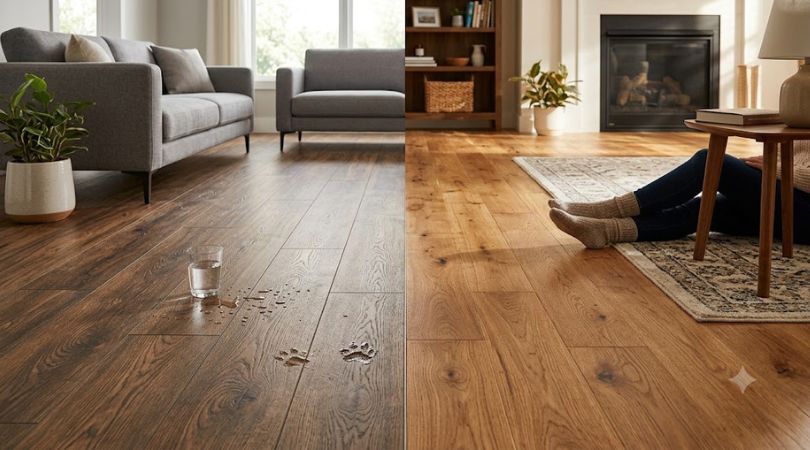
Let me be direct about what does not belong in a full bathroom, because people ask hopefully. Solid hardwood and standard laminate are both wrong for this room. Hardwood swells, cups, and blackens when water sits on it or seeps into the seams, and a bathroom guarantees water will do exactly that. Laminate’s fibreboard core swells and delaminates when moisture reaches it through the joints, and bathrooms find those joints.
There is a narrow exception. A powder room with no shower or tub sees far less water, and a water-resistant engineered floor can survive there if you are careful. But for any bathroom with a shower or bath, the humidity alone rules out wood-based floors. Choose a waterproof material and spare yourself the eventual repair.
The Bathroom Floors That Actually Work
Here is how the genuinely waterproof options compare on what matters in a bathroom.
Porcelain tile and SPC vinyl are the two I recommend most. Porcelain is the durable, timeless, radiant-friendly choice; SPC is the warmer, easier, budget-friendly one. Our porcelain flooring page and luxury vinyl page show the ranges we carry.
Porcelain: The Bathroom Standard For Good Reason
Porcelain tile is the default bathroom floor across the industry, and it earns the position. It is fully waterproof, extremely hard-wearing, resistant to stains and chemicals, and available in a vast range of looks, including convincing wood-plank and marble styles that give you the appearance of those materials with none of their water problems.
Its two weaknesses are hardness and cold. Porcelain is unforgiving underfoot and, on a Quebec winter morning, genuinely cold to bare feet. Both are solved the same way, and it is the pairing I recommend most in a bathroom: radiant heat beneath the tile. Porcelain conducts heat beautifully, so a warm tile floor on a February morning turns the room’s biggest weakness into its best feature. The grout is the only real maintenance, and sealing it periodically keeps it clean.
Spc Vinyl: Warm, Waterproof, And Easy
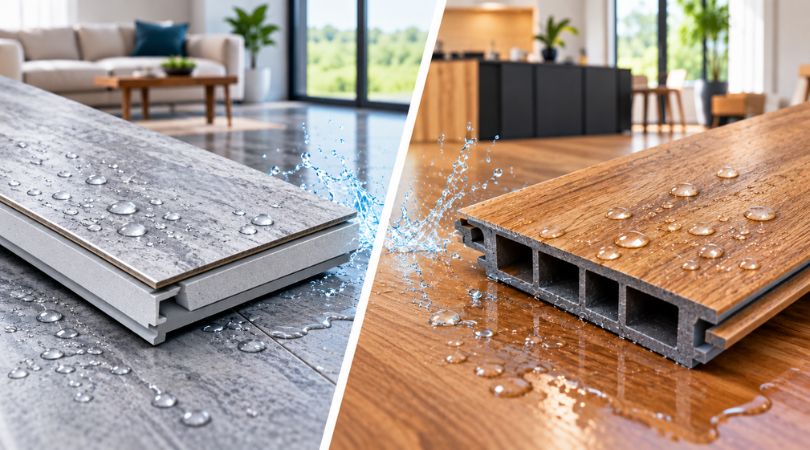
Rigid SPC vinyl has become my most-recommended bathroom floor for homeowners who want warmth and value. It is fully waterproof, warmer underfoot than tile, softer to stand on, quieter, and it installs faster, often as a floating floor. Modern SPC comes in wood and stone looks convincing enough that guests will not clock it as vinyl.
For a family bathroom, a busy ensuite, or a basement bathroom over a cold slab, SPC is often the smart choice. It gives you the waterproof performance a bathroom demands without the cold, hard feel of tile, and at a friendlier price. The one caution is to buy a quality product with a proper wear layer and, for wet rooms, a stable core, and to have the seams and perimeter handled correctly so water cannot get underneath.
Slip Resistance: The Safety Factor
A bathroom floor is wet by design, which makes slip resistance a genuine safety issue, not an afterthought, especially in a home with children or older adults. A glossy, smooth floor becomes dangerous the moment it gets wet.
Choose a matte or textured finish for any bathroom floor. Textured porcelain, matte SPC, and small-format tile with more grout lines all provide better grip underfoot. Small mosaic tiles on a shower floor are popular precisely because the many grout lines add traction. If you love a smoother tile, add a bath mat at the key spots. The goal is a floor that stays safe wet, not just one that looks good dry.
Radiant Heat: The Quebec Bathroom Upgrade
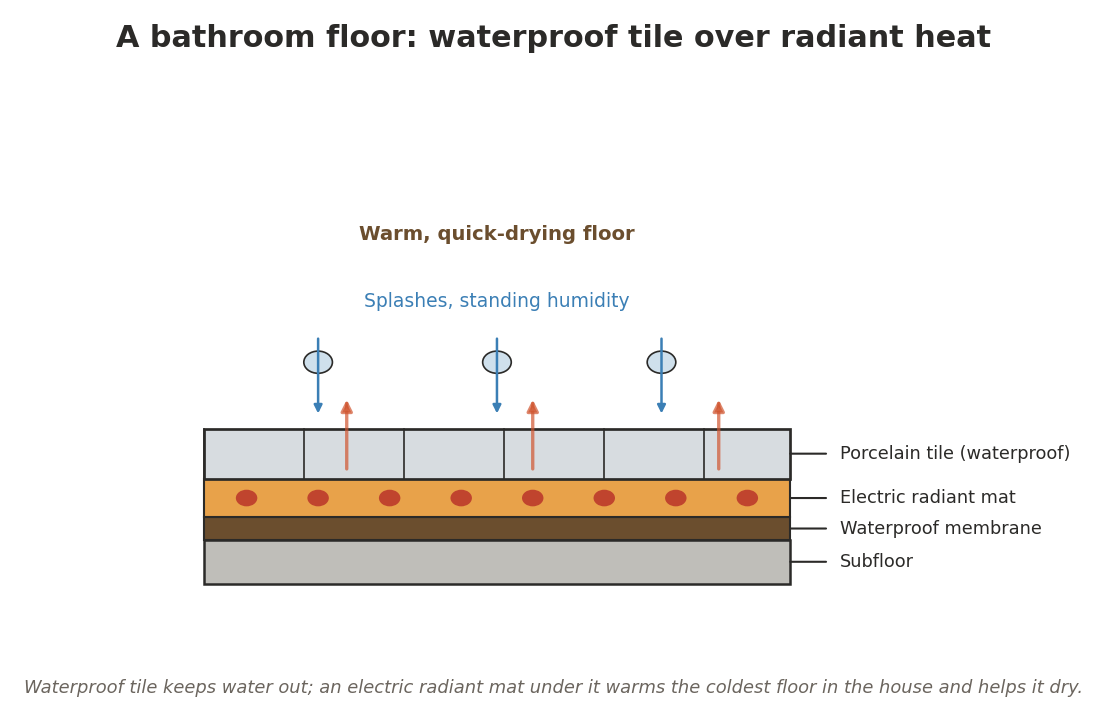
If there is one flooring upgrade I recommend most in a Quebec bathroom, it is radiant heat under the tile. Our winters are long and bathroom floors are the coldest surface you touch first thing in the morning. Electric radiant mats under porcelain tile transform that experience, and because they are usually a single-room retrofit, they are one of the most achievable in-floor heating projects in a home.
Radiant heat does more than feel good. It warms the room quickly, helps the floor dry after a shower, and reduces the lingering dampness that can feed mould in a sealed winter bathroom. Paired with porcelain, which conducts heat superbly, it is the combination I put in my own bathroom. For the full picture on how flooring behaves over radiant systems, our cold climate flooring guide covers the material behaviour.
Managing Moisture And Mould In A Sealed Winter Home
Waterproof flooring solves the surface, but a Quebec bathroom also fights humidity in the air, which intensifies in winter when the house is sealed. Standing moisture and warm, damp air are what feed bathroom mould. The floor helps by being waterproof and easy to clean, but ventilation does the rest.
Run the exhaust fan during and after every shower, wipe standing water from the floor, and reseal tile grout periodically so moisture cannot penetrate it. Holding the home’s overall humidity in the 35 to 55 percent range that the Canada Mortgage and Housing Corporation recommends keeps mould in check throughout the house, bathroom included. A waterproof floor plus good ventilation is the combination that keeps a winter bathroom healthy.
What I Would Choose, By Bathroom
For a primary bathroom you want to feel luxurious and last decades, porcelain tile with radiant heat beneath it is the answer, warm, waterproof, and timeless. For a busy family bathroom or an ensuite where warmth and value matter, matte SPC vinyl gives waterproof performance without the cold. For a basement bathroom over a cold slab, SPC or porcelain with radiant both work, and I lean to whichever suits the budget. For a powder room with no shower, you have freedom, and a water-resistant engineered wood can even flow in from an adjoining space.
The Bottom LINE From The Showroom
“The bathroom is the one room where I will not bend on the material,” says Sefi Dollinger, Owner of Planchers Bellefeuille, serving Quebec homeowners since 1983. “People fall in love with the idea of wood in an ensuite, and I have to be the one to say no, because I am also the one who gets the call two years later about the cupped, blackened boards by the tub. Porcelain or a good SPC, every time, and if it is porcelain, put radiant heat under it. A warm tile floor on a January morning is the single upgrade nobody regrets.”
Frequently Asked Questions
What is the best flooring for a bathroom?
Porcelain tile or rigid SPC vinyl. Both are fully waterproof, easy to clean, and come in a wide range of styles. Porcelain is the most durable and pairs perfectly with radiant heat; SPC is warmer underfoot and easier to install.
Can you put hardwood in a bathroom?
Not in a full bathroom with a shower or tub. Hardwood swells, cups, and blackens when exposed to standing water and humidity. A water-resistant engineered floor can survive in a powder room with no shower, but waterproof materials are the safe choice.
Is vinyl plank good for bathrooms?
Yes, rigid SPC vinyl is an excellent bathroom floor. It is fully waterproof, warmer and softer underfoot than tile, easy to clean, and comes in convincing wood and stone looks. Ensure the seams and perimeter are sealed so water cannot get underneath.
Is porcelain or vinyl better for a bathroom?
Both are waterproof. Porcelain is more durable, more heat-resistant, ideal with radiant heat, and offers the widest style range, but it is hard and cold. SPC vinyl is warmer, softer, quieter, easier to install, and more budget-friendly.
What bathroom flooring is warmest underfoot?
SPC vinyl is warmer than tile on its own. But the warmest bathroom floor of all is porcelain tile with electric radiant heat beneath it, which turns the coldest surface in the house into a heated one, ideal for Quebec winters.
Is laminate flooring waterproof enough for a bathroom?
No. Standard laminate has a fibreboard core that swells and delaminates when moisture reaches the joints, which a bathroom guarantees. Choose porcelain tile or SPC vinyl instead for genuine waterproof performance.
What is the most slip-resistant bathroom flooring?
A matte or textured surface. Textured porcelain, matte SPC, and small-format or mosaic tile with more grout lines all improve grip when wet. Avoid glossy, smooth floors in a bathroom, which become slippery as soon as they get wet.
Should I put radiant heat under my bathroom floor?
In a Quebec home, it is the upgrade I recommend most. Electric radiant mats under porcelain tile warm the coldest floor in the house, help it dry after showers, and reduce lingering dampness. As a single-room retrofit, it is very achievable.
How do I prevent mould in a bathroom?
Run the exhaust fan during and after showers, wipe standing water from the floor, reseal tile grout periodically, and hold the home’s humidity at 35 to 55 percent. A waterproof, easy-clean floor plus good ventilation keeps a winter bathroom healthy.
Does bathroom tile grout need sealing?
Yes. Grout is porous and absorbs moisture and stains if left unsealed, which can lead to discolouration and mould. Reseal it periodically to keep it clean and water-tight. This is the main maintenance task with a tile bathroom floor.
What flooring works in a basement bathroom?
SPC vinyl or porcelain tile, both of which handle the moisture a below-grade slab carries. SPC is warmer over a cold slab and easier to install; porcelain with radiant heat is the more durable, luxurious option. Avoid any wood-based floor.
Can I use the same floor in my bathroom and bedroom?
Only if it is waterproof and suits both. SPC vinyl can run from a bedroom into an ensuite for a seamless look. Hardwood cannot, so if the bedroom is wood, plan a transition at the bathroom door to a waterproof material.