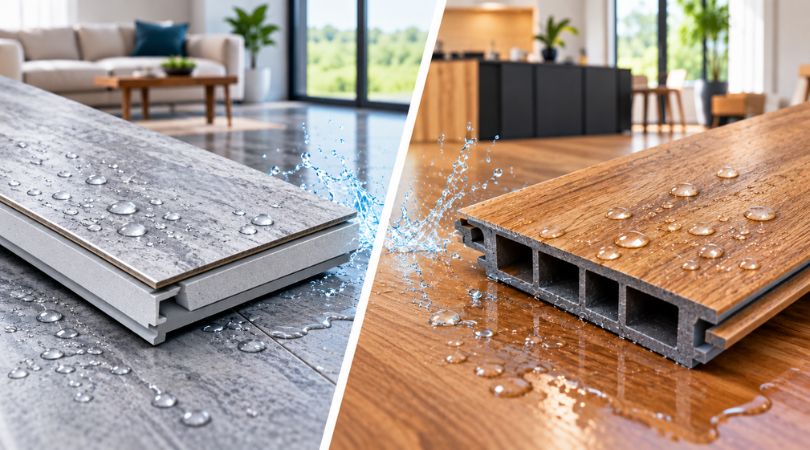

The best flooring for radiant heating in a Quebec home is engineered hardwood, porcelain tile, or a good SPC vinyl. All three transfer heat well and stay stable as the slab heats and cools. Solid hardwood is the common mistake. It moves too much over a heat source and often ends up splitting, warping, or voiding its warranty. The material you choose decides whether the system feels effortless or fights you.
The Physics You Are Working With
Radiant heat rises through the floor, so the floor is not just a surface to walk on. It is the radiator. Two properties decide performance: how easily heat passes through the material, and how much the material moves when the temperature beneath it changes.
Dense, thin, stable materials win on both counts. Thick or moisture-sensitive materials lose. That is why porcelain tile heats a room quickly and evenly, while a thick solid plank acts like a blanket over the coil, forcing the system to run hotter to deliver the same warmth. Once you see the floor as part of the heating system, the ranking below makes sense.
Hydronic Versus Electric: Know Your System First
Before picking a floor, know which radiant system you have, because it changes the details. The two types heat differently and suit different rooms.
Hydronic systems circulate warm water through PEX tubing, usually embedded in a concrete slab or a lightweight gypsum overpour, sometimes in channels under a subfloor. They are efficient for whole-house heating and common in new Quebec builds and basements. Because they run through a slab with real thermal mass, they heat and cool slowly and hold temperature well. That slow, steady behaviour is gentle on flooring, but the slab must be fully cured and dry before anything goes down.
Electric systems use resistance cables or mats, usually set in thinset directly under tile. They are most common as a retrofit in a single room, a bathroom or a kitchen, where running water lines is impractical. They respond faster and cost more to run, so they suit spot heating rather than whole-house. Electric mats under tile are the classic warm-bathroom-floor upgrade.
The flooring rules are broadly the same for both, with one caveat: electric systems can create sharper localized temperature spikes right over a cable, which makes the manufacturer’s surface temperature limit even more important to respect.
Why SOLID Wood Is Almost Always The Wrong Choice
Solid hardwood and radiant heat are a difficult marriage. Wood is a natural insulator, so a thick solid plank slows the very heat you are paying to produce. Worse, wood expands and contracts with humidity, and a radiant slab drives large swings in the wood’s moisture content across a Quebec heating season.
The National Wood Flooring Association is clear that solid wood over radiant heat carries a real risk of gapping and warping, and many manufacturers void the warranty outright. I have been called into homes where a beautiful solid oak floor developed gaps wide enough to lose a coin in by February. The repair is expensive and avoidable. If you love the look of wood over radiant heat, engineered is the answer, not solid.
The Materials That Actually Work, Ranked
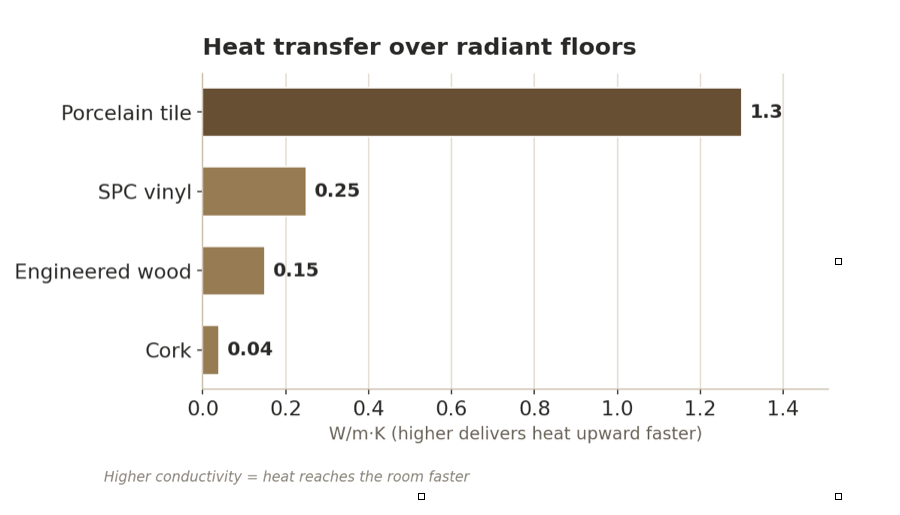
Here is how the realistic options rank for a Quebec radiant system, best to worst, across everything that matters.
| Rank | Material | Heat Transfer | Comfort Underfoot | Relative Cost | Stability on Slab | Install Complexity | Ideal Applications |
|---|---|---|---|---|---|---|---|
| 1 | Porcelain Tile | Excellent | Firm, cool when off | Mid | Excellent | High, pro install | Bathrooms, entries, kitchens, basements |
| 2 | Engineered Hardwood | Good | Warm, soft | Mid to high | Very good | Moderate | Living areas wanting a wood look |
| 3 | Rigid SPC Vinyl | Good | Warm, slight give | Low to mid | Excellent | Low, DIY-friendly | Basements, wet rooms, tight budgets |
| 4 | Cork (Glued) | Fair | Warmest, softest | Mid | Very good | Moderate | Bedrooms where comfort beats fast heat |
| 5 | Laminate (Rated) | Fair to good | Firm | Low | Good | Low | Budget living areas, rated products only |
| 6 | Solid Hardwood | Poor | Warm | Mid to high | Poor | Moderate | Not recommended over radiant |
Porcelain leads because it conducts heat fastest and never reacts to moisture. Engineered wood is the top pick for anyone who wants real wood underfoot. SPC vinyl is stable and affordable. Cork works but insulates more, so it heats slowly. Laminate is acceptable only if the specific product is rated for radiant heat, since many are not.
Engineered Hardwood Over Radiant, In Detail
Cross-section: engineered plank over radiant-rated adhesive and a hydronic slab, with heat rising to a capped surface temperature.
Engineered is the wood answer for radiant heat, but not every engineered floor is equal, and the construction details decide success. This is where people who did their homework still get caught.
Construction and core. An engineered board is a real wood veneer over a multi-ply or HDF core. The cross-layered plies resist the seasonal movement that destroys solid wood, which is exactly why engineered belongs over radiant heat. A quality multi-ply core is more stable than a single-ply or HDF core for this use.
Plank dimensions. Narrower and shorter boards move less in absolute terms than wide, long planks, so a 125 to 150 mm engineered board is a safer bet over radiant than a 220 mm wide plank. If you want wide planks, insist on a premium multi-ply core rated by the manufacturer for radiant use.
Species matters even in engineered. The veneer still expands and contracts. More stable species like white oak and walnut behave better over radiant than beech or maple. The core does most of the stabilizing work, but the species is a second lever.
Wear layer. A thicker veneer looks and refinishes better, but it does not need to be thick for radiant to work. Balance refinishing potential against the stability of a good core.
Manufacturer approval is non-negotiable. Use only a product the manufacturer explicitly approves for radiant heat, and follow their stated maximum surface temperature and their gluing method. This single rule protects both the floor and the warranty. Our engineered hardwood page lists the radiant-rated constructions we carry.
Temperature Limits And System Efficiency
Here is the number that governs everything: almost every wood and resilient floor caps the surface temperature at around 27 degrees Celsius. Push past it and you risk drying the wood, softening adhesives, and voiding the warranty. Tile has more headroom, which is part of why it pairs so well with radiant.
That cap has an efficiency consequence. The more insulating your floor, the hotter the water or cable has to run to reach the same surface temperature, and the harder the system works. A thick cork or wide solid plank forces the system to run near its limit just to deliver comfortable warmth, while porcelain delivers the same warmth with the water running cooler. Choosing an efficient floor is not only about comfort, it lowers what the system costs to run all winter.
This is measured as thermal resistance, or R-value, and radiant manufacturers typically want the total floor covering under about R-1.0. Tile is well under. Most engineered wood and SPC fit. Thick cork or a solid plank plus a thick underlay can blow past it, which is another reason those combinations disappoint.
The Comfort Tradeoff Nobody Mentions
There is a tension between how a floor feels underfoot and how well it delivers heat. Porcelain conducts so well that it can feel cool the moment the system cycles off, then warms quickly when it fires. Cork and thick engineered wood hold heat longer and feel softer, but they respond more slowly and can lag behind the thermostat.
For most Quebec homes, I recommend engineered wood in living areas for the balance of warm-underfoot feel and real wood, and porcelain in wet rooms where fast, even heat matters most. Match the material to how each room is used, not to a single rule for the whole house.
Room By Room Over Radiant
Bathrooms. Porcelain tile with electric mats or hydronic loops. This is the single best radiant application in a house, since tile loves heat and a warm bathroom floor is the upgrade people notice most.
Kitchens. Porcelain or SPC. Both handle spills and heat well, and the kitchen’s traffic suits a hard-wearing surface.
Living and family rooms. Engineered hardwood for warmth and a wood look, or SPC on a tighter budget. This is where the comfort-versus-response tradeoff matters most, and engineered wins for most families.
Basements. SPC or porcelain over the slab, both of which shrug off the slab’s moisture. A hydronic loop in a basement slab is one of the most comfortable heating setups in a Quebec home. Our cold climate flooring guide explains basement slab behaviour in depth.
Bedrooms. Engineered wood or cork, where slower response is fine because the room holds a steady temperature and comfort underfoot matters at 6 a.m. Our cork flooring page covers where cork fits.
Installation Rules That Protect The Floor
Choosing the right material is half the job. Installation is the other half, and it is where warranties are won or lost.
- Acclimate the flooring in the room for the time the manufacturer specifies before installing.
- Start the system slowly. Bring the water or slab temperature up gradually over several days, never all at once.
- Cap the surface temperature at the manufacturer’s limit, often around 27 degrees Celsius, to protect wood and adhesives.
- Test subfloor moisture before laying anything. A slab that has not fully dried will haunt you later. A new concrete slab can take a month or more per inch of thickness to dry.
- Run the system before install. With a new slab, run the radiant heat for a few days to drive out construction moisture, then power down for installation, then ramp back up slowly afterward.
- Use the right adhesive rated for radiant heat if you are gluing engineered wood or cork.
Skip any one of these and you invite exactly the failures the product was meant to avoid.
The Mistakes That Void Warranties
Three mistakes come up again and again. First, choosing solid wood because it costs less than engineered, then losing the whole floor to gapping. Second, cranking the heat to maximum on install day, which shocks the material. Third, laying a floor over a slab still holding construction moisture. Each is avoidable with patience and the right product.
A fourth, subtler one: adding a thick insulating underlay under a radiant-rated floor because it felt nice in the showroom. That underlay pushes the total R-value past the limit and starves the room of heat, and homeowners then blame the heating system. Use only the underlay the flooring and radiant manufacturers both approve.
Cost And Running-cost Picture
Material cost is only part of the radiant equation. The floor you choose affects what the system costs to run for its whole life. Porcelain and SPC sit at the affordable end for material and are efficient to run because they conduct well. Engineered hardwood costs more up front and runs slightly less efficiently than tile, but delivers the wood look many homes want. Cork is comfortable but the least efficient of the sensible options, raising running cost.
Treat all of this as directional for the Saint-Jerome and greater Montreal area, since energy prices, system type, and home insulation drive the actual numbers. The point to hold onto is that a cheaper, more insulating floor can cost more over ten winters than a pricier, efficient one.
A Radiant Project From The Showroom
A family building near Saint-Sauveur put hydronic heat in a new slab across the whole main floor and wanted wood everywhere. They had been quoted solid white oak by another supplier. We walked through the physics, showed them a radiant-rated engineered white oak in a 150 mm width, and put porcelain in the entry and bathrooms. Two winters on, the floor is flat and quiet, the system runs at a comfortable water temperature, and there is not a gap to be found. The solid floor they nearly bought would have been opening up by the first February.
Choose For Your System
“People think the floor and the heating system are two separate decisions,” says Sefi Dollinger, Owner of Planchers Bellefeuille, serving Quebec homeowners since 1983. “They are one decision. I always ask what is under the floor before I show a sample, because a gorgeous solid plank over a radiant slab is a callback waiting to happen. Tell me it is radiant, and I point you to engineered or porcelain, and that floor will still be flat and silent in ten years.”
If you are building or renovating over in-floor heat, bring your system details into the showroom and we will match a floor that works with it, not against it. Browse our full flooring range to see the radiant-compatible options together.
Frequently Asked Questions
What is the best flooring for radiant heating?
Porcelain tile transfers heat best and is ideal for wet rooms. Engineered hardwood is the top choice for a wood look in living areas. SPC vinyl is the affordable, stable option. All three work well over radiant heat.
Can you put hardwood over radiant heat?
Engineered hardwood, yes, provided it is rated for radiant use and installed to the manufacturer’s rules. Solid hardwood is not recommended, because it moves too much over a heat source and often gaps, warps, or voids its warranty.
Why does solid hardwood fail over radiant heating?
Solid wood expands and contracts with moisture, and a radiant slab drives large seasonal swings in the wood’s moisture content. That movement causes gapping, cupping, and splitting. Wood also insulates, forcing the system to run hotter.
What temperature can radiant floors reach?
Most wood and resilient floors cap the surface temperature at around 27 degrees Celsius. Exceeding it risks drying wood, softening adhesives, and voiding warranties. Tile tolerates higher temperatures, which is one reason it pairs so well with radiant heat.
Is engineered hardwood good for radiant heat?
Yes, when it is manufacturer-approved for radiant use. Its cross-layered core resists the seasonal movement that destroys solid wood. Choose a stable species, a quality multi-ply core, and a moderate plank width.
Does the type of flooring affect heating efficiency?
Significantly. The more insulating the floor, the hotter the system must run to reach the same surface temperature, which raises running cost. Porcelain and SPC conduct well and run efficiently. Thick cork or solid wood insulate and cost more to run.
What is the difference between hydronic and electric radiant heating?
Hydronic circulates warm water through tubing in a slab and suits whole-house heating. Electric uses cables or mats under tile and suits single-room retrofits like bathrooms. Hydronic responds slowly and holds heat, electric responds faster and costs more to run.
Can I install vinyl plank over radiant heat?
Yes, rigid SPC vinyl is stable and conducts heat well, making it a good radiant choice, especially in basements and wet rooms. Confirm the specific product is rated for radiant use and respect the temperature limit.
Do I need a special underlay for radiant heating?
Use only the underlay both the flooring and radiant manufacturers approve. A thick insulating underlay pushes the floor’s total R-value past the limit and starves the room of heat. Often no separate underlay is used at all.
How long should a new slab dry before flooring goes down?
A new concrete slab can take a month or more per inch of thickness to dry, and it must test dry before flooring is installed. Running the radiant system for a few days helps drive out construction moisture first.
Is cork flooring compatible with radiant heat?
Yes, glued cork works over radiant heat, but it insulates more than tile or SPC, so the room heats slowly and running cost is higher. Cork suits bedrooms where comfort matters more than fast, responsive heat.
Can laminate flooring be used over radiant heating?
Only if the specific product is rated for radiant heat, as many are not. Rated laminate performs acceptably, but its fibreboard core and any foam underlay can insulate more than SPC, so check the R-value and the manufacturer’s approval.
Visit our Saint-Jerome showroom or book a consultation.
450, boul. Roland-Godard, Saint-Jerome, QC | (450) 431-8789 | planchersbellefeuille.com