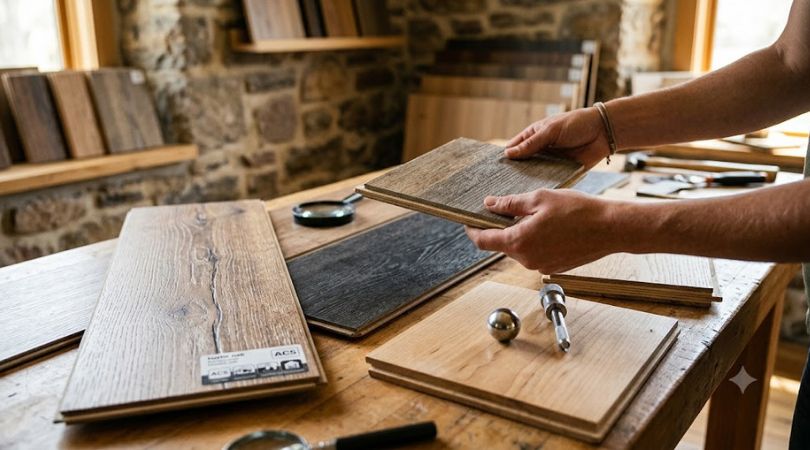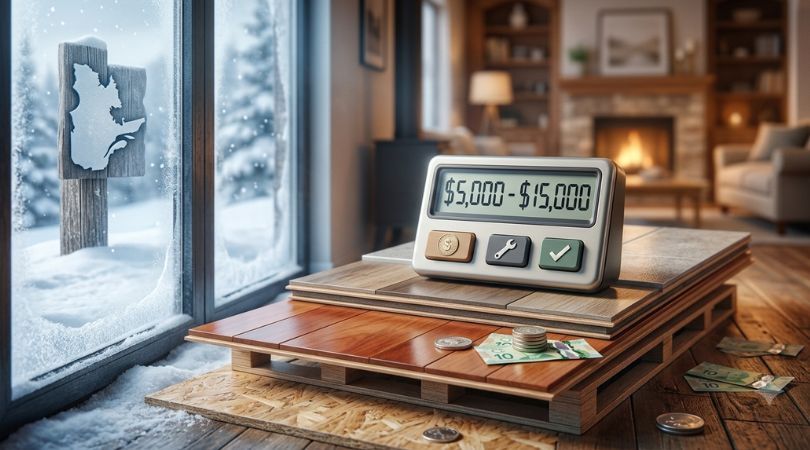
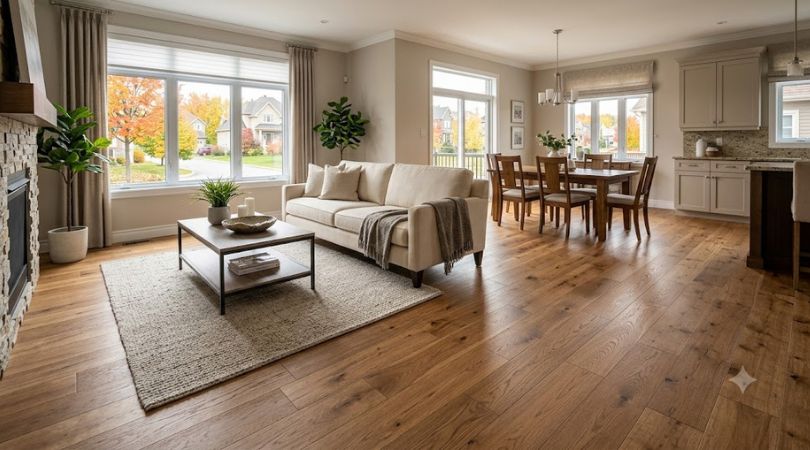
Real hardwood adds the most resale value to a Quebec home, because buyers recognize it, want it, and pay for it. Engineered hardwood delivers nearly the same appeal at a smarter price, especially over concrete or in a basement. Consistent flooring in neutral tones throughout the main floor sells better than a patchwork of materials. The wrong flooring, or a mix of cheap ones, quietly lowers what buyers will offer.
Floors Are The First Thing A Buyer Stands On
Buyers form an opinion in the first minute, and the floor is under their feet the whole time. Before they read a single feature sheet, they have already felt whether the home reads as cared-for and quality or tired and cheap, and flooring drives that impression more than almost anything except the kitchen. This is not just about looks. A floor signals how the whole house was maintained. Scuffed laminate and a different floor in every room tell a buyer the owner cut corners, and they start looking for other corners that were cut. A clean, continuous hardwood or convincing wood-look floor tells the opposite story. When you sell, your flooring is doing quiet, constant persuasion, so it is worth choosing with the buyer in mind, not just your own move-in day.
Why Hardwood Still Wins At Resale
Ask any Quebec real estate agent what buyers request, and hardwood is at the top of the list. It carries a reputation for quality, permanence, and value that no other floor matches, and that reputation shows up in offers. Part of it is real substance. Hardwood can be refinished, so a buyer sees a floor that can be renewed rather than replaced, which reads as a long-term asset. Part of it is perception, the simple fact that buyers equate genuine wood with a well-built, desirable home and will pay a premium for it. In a competitive listing, hardwood is a feature agents put in the description because it moves buyers. If your main floor already has hardwood in good shape, protect it. If it does not, hardwood is the flooring upgrade with the strongest link to what buyers will pay.
Engineered Hardwood: The Value-Smart Alternative
You do not always need solid hardwood to capture the resale appeal of wood. Engineered hardwood has a genuine hardwood surface, so to a buyer walking through, it reads as the real thing, which it is, while costing less to buy and install in many situations. Engineered wood also goes where solid cannot, over concrete, in basements, and with radiant heat, which lets you extend that wood look and its resale pull into rooms solid hardwood would fail in. For a seller weighing cost against return, engineered hardwood often gives the best of both, real wood appeal at a price that leaves room for return when you sell.
Consistency And Neutral Tones Are What Buyers Want
Two homes can have the same quality floor and sell differently because of how the flooring is handled across the house. Buyers respond to flow and neutrality. Real hardwood on the main floor is the strongest positive and buyers pay for it, so keep it refinished and continuous. Engineered hardwood is nearly as strong with wider reach, so use it over concrete and in basements. One material running through the main floor feels larger and more cohesive, so run the same floor from kitchen to living. Neutral mid-tones have the widest buyer appeal, so avoid trendy or very dark colours. A different floor in every room reads as pieced-together, so unify before listing. Worn or dated flooring lowers offers, so refinish or replace high-visibility areas. Neutral, mid-tone floors appeal to the widest set of buyers, because they suit almost any decor and do not date the home. When you sell, wide appeal beats personal taste.
Where Cheap Flooring Quietly Costs You
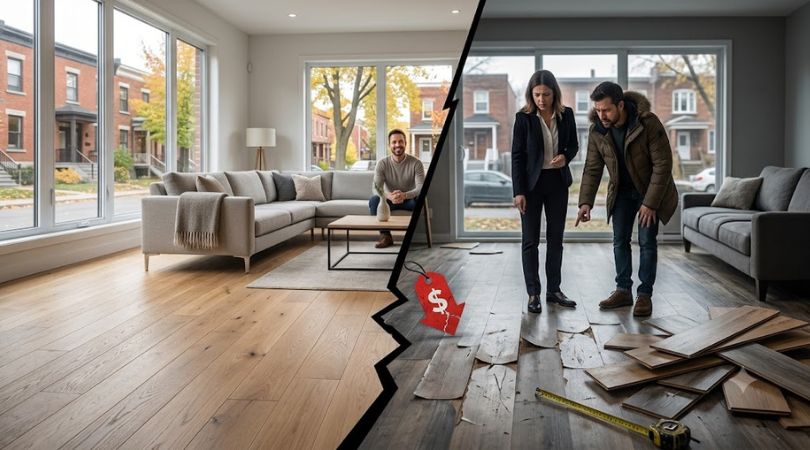
Saving on flooring can feel smart until you sell, and then it works against you in ways that are hard to see on the listing. Thin, obviously synthetic laminate, worn carpet, and a mismatched patchwork of materials all read as deferred maintenance to a buyer. The damage is not just the cost to replace those floors, it is the doubt they plant. A buyer who sees cheap flooring assumes the same budget thinking went into things they cannot see, the furnace, the roof, the wiring, and they either offer less or walk. This is the trap of the lowest-cost floor: it saves a little now and shaves more off your sale price later. The place to be frugal is a low-visibility room, not the floors a buyer sees first.
Flooring For Rentals And Investment Properties
If the property is a rental or a flip rather than your forever home, the math shifts, and that is fine. Here you are balancing durability and cost against resale polish, and the winning choice is often a quality rigid vinyl. A good SPC vinyl is waterproof, scratch-resistant, and cleans up between tenants, and its convincing wood look photographs well and shows well, which supports both rent and resale. It gives you the appearance buyers and tenants want without the cost of real wood in a property you do not live in. For a home you plan to sell to an owner-occupant, lean back toward real or engineered hardwood. For income property, durability and a smart wood-look floor usually deliver the better return.
Cost Versus Return Before You Sell
You do not need to re-floor the whole house to sell well. Spend where buyers look and where the payoff is real. Refinishing existing hardwood is often the single best-return flooring move before a sale, because it makes a tired floor look new for a fraction of replacement cost. Focus the budget on high-visibility, high-traffic areas, the entry, the main living space, the kitchen, where first impressions form. Do not over-invest in a bedroom or a finished basement a buyer barely notices. And unify the main floor if it is a patchwork, because flow sells. The National Wood Flooring Association publishes the standards that keep a refinished or new wood floor performing, and a licensed installer protects that value.
What Sefi Tells Sellers
“I have watched two nearly identical houses on the same street sell weeks and thousands apart, and the floors were a big part of why,” says Sefi Dollinger, Owner of Planchers Bellefeuille, serving Quebec homeowners since 1983. “The one that sold fast had real hardwood running clean through the main floor. The one that sat had a different cheap floor in every room. Buyers do not itemize it, they just feel that one home is worth more. If you are selling, put your money where the buyer’s eyes land first, keep it neutral, and keep it consistent. That is the flooring that pays you back at closing.”
FREQUENTLY ASKED QUESTIONS
Does hardwood flooring increase home value?
Yes. Hardwood carries a strong reputation for quality and permanence, and buyers actively request it and pay a premium for it, so it is consistently linked to higher offers and faster sales. It can also be refinished, which buyers see as a lasting asset. In the Quebec market, real hardwood on the main floor is one of the most resale-positive flooring choices.
What flooring adds the most resale value?
Real hardwood adds the most, followed closely by engineered hardwood, which gives the same wood appeal at a smarter price and can go over concrete and in basements. Consistent flooring in neutral mid-tones throughout the main floor also lifts value. Cheap, mismatched, or worn floors do the opposite and can lower what buyers offer.
Is engineered hardwood good for resale?
Yes. Engineered hardwood has a genuine hardwood surface, so buyers see and value it as real wood, which it is. It also installs where solid wood cannot, letting you carry that resale appeal into basements and rooms over concrete. For a seller balancing cost against return, engineered hardwood often delivers the best value per dollar spent.
Should I refinish or replace my floors before selling?
Refinishing existing hardwood is usually the best-return move, because it makes a tired floor look new for a fraction of replacement cost. Replace flooring only where it is worn out, badly dated, or a jarring patchwork that hurts flow. Focus any budget on high-visibility main-floor areas rather than low-traffic rooms buyers barely notice.
Does flooring need to match throughout the house for resale?
It helps for the main floor to flow with one continuous material, because it makes the space feel larger and reads as intentional and quality. A different floor in every room signals a pieced-together, budget renovation and can lower perceived value. Bedrooms and basements have more latitude, but unify the connected main-floor spaces before listing.
What flooring is best for a rental or investment property?
A quality rigid vinyl like SPC is usually best for rentals, because it is waterproof, scratch-resistant, easy to clean between tenants, and photographs well with a convincing wood look. It delivers the appearance tenants and buyers want without the cost of real wood in a property you do not occupy. For owner-occupant resale, lean toward real or engineered hardwood instead.
Do dark floors help or hurt resale?
Very dark floors can wow one buyer and lose several, because they show dust and scratches and can feel trendy or dating, which narrows appeal. Neutral mid-tones suit the widest range of buyers and decor, so they support resale better. When selling, choose broad appeal over bold personal taste in flooring colour.
Is cheap flooring a mistake before selling?
Often, yes. Obviously synthetic laminate, worn carpet, or a mismatched mix reads to buyers as deferred maintenance and plants doubt about the rest of the home, which can lower offers by more than you saved. Spend on the floors buyers see first and keep low-visibility rooms modest, rather than putting the cheapest floor where it shows.
Selling soon? Book a consultation and we will tell you honestly which flooring moves are worth it before you list, and which to skip.
450, boul. Roland-Godard, Saint-Jerome, QC | (450) 431-8789 | planchersbellefeuille.com